Rotary sensors are pretty much everywhere these days, playing a crucial role in a whole bunch of industries. They’re amazing at giving us precise info about rotational positions, which is pretty important if you think about it. Over time, these sensors have come a long way, thanks to tech improvements — now they’re more accurate, reliable, and versatile than ever. You’ll find them in automation setups, robots, machinery, and more. They really help boost efficiency and keep things safe and smooth.
With automation becoming a big deal in manufacturing, cars, aerospace, and so on, the demand for rotary sensors is only growing. They do a lot more than just keep track of movement — they’re key players in creating smart systems that need real-time data. If we look at the top 10 benefits of rotary sensors, it’s clear that their impact goes way beyond simple position detection. They’re actually shaping the way modern tech is designed, improving everything from precise angle measurements to easy integration with digital systems. Honestly, they’re changing the game in engineering and industry, and it’s pretty exciting to see how they’re making things better across the board.

Understanding Rotary Sensors: Definition and Functionality
Rotary sensors play a crucial role in various industries by providing precise angle and position measurements. Defined as devices that convert rotational movement into an electrical signal, rotary sensors can effectively determine the degree of rotation or linear displacement. Their functionality primarily relies on principles such as potentiometry, magnetic detection, and optical encoding, making them indispensable in applications ranging from automotive systems to industrial automation. According to a report by MarketsandMarkets, the rotary sensor market is projected to grow from USD 1.5 billion in 2020 to USD 2.4 billion by 2025, reflecting a CAGR of 10.1%, driven by the increasing demand for sophisticated automation solutions.
In practical applications, rotary sensors are widely utilized in motors, robotics, and other motion control systems. For instance, in the automotive sector, electric power steering systems leverage rotary sensors to enhance vehicle maneuverability and safety. Additionally, in industrial automation, these sensors serve pivotal roles in feedback systems for robotics, where they ensure precision in robotic arm movements. A study conducted by ResearchAndMarkets also highlighted that the healthcare sector increasingly relies on rotary sensors for medical devices, showcasing their versatility. As industries continue to advance, the ongoing integration of rotary sensors not only improves operational efficiency but also elevates the standard for precision engineering across various fields.
Top 10 Benefits of Rotary Sensors
Key Advantages of Using Rotary Sensors in Various Industries
Rotary sensors play a crucial role in various industries, offering key advantages that enhance operational efficiency and precision. One of the primary benefits of these sensors is their ability to provide accurate angle and position measurements. This capability is vital in sectors such as robotics, where accurate feedback is needed for controlled movement and positioning. Industries like automotive and aerospace heavily rely on rotary sensors for monitoring the position of components like throttle and gear shifts, ensuring enhanced safety and performance.
Another significant advantage of rotary sensors is their versatility. They can be integrated into an array of applications, from industrial machinery to consumer electronics. In manufacturing, for example, rotary sensors are used to optimize assembly line processes by providing real-time data on part orientation and position. In the medical field, these sensors help in precise navigation of surgical instruments, contributing to better patient outcomes. The reliability and durability of rotary sensors further make them ideal for harsh environments, such as in outdoor machinery or equipment exposed to extreme temperatures, ensuring that operations remain uninterrupted and efficient.
Common Applications of Rotary Sensors in Modern Technology
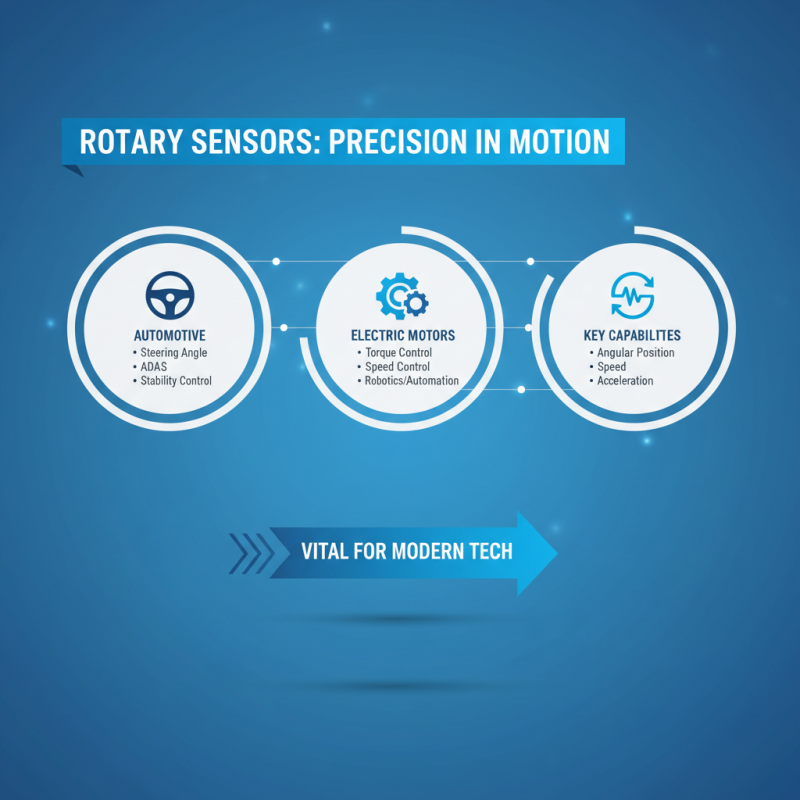
Rotary sensors are vital components in various modern technological applications due to their ability to provide precise measurements of angular position, speed, and acceleration. These sensors are widely used in the automotive industry for applications such as steering angle detection, where accurate feedback is essential for the implementation of advanced driver-assistance systems (ADAS) and stability control. Additionally, they are integral in electric motors, allowing for efficient control of torque and speed in applications like robotics and automation.
In the field of industrial machinery, rotary sensors play a crucial role in monitoring equipment performance and ensuring safety. They help in the automation of production lines by providing real-time data about the movement and position of components, which is essential for maintaining optimal operational efficiency. Other applications include their use in consumer electronics for touch and gesture control interfaces, facilitating intuitive user experiences. As industries continue to embrace automation and smart technology, the importance of rotary sensors in enhancing precision and functionality will undoubtedly grow, leading to increased efficiency across numerous sectors.
Comparison of Rotary Sensors with Other Sensor Types
Rotary sensors, distinguished by their ability to measure angular position or rotation, have garnered significant attention in various industries. When compared to other sensor types, such as linear sensors and proximity sensors, rotary sensors offer unique advantages in applications that require precise measurement of rotational movement. For instance, in robotics and automation, rotary sensors can provide accurate feedback on motor positions, enabling smoother and more reliable operations. Additionally, their ability to function effectively in various environments makes them more adaptable than many linear sensors, which may only be suitable for specific setups.
Another notable comparison lies between rotary sensors and optical sensors. While both can be used for position sensing, rotary sensors typically offer better performance in environments with dust, dirt, or moisture where optical sensing might falter due to obstructions. Furthermore, rotary sensors generally require less maintenance than optical systems, making them more favorable for applications in manufacturing settings where reliability and long-term durability are essential. Ultimately, the choice between rotary sensors and their counterparts hinges on the specific requirements of the application, including factors like accuracy, environmental conditions, and maintenance needs.
Factors Influencing the Selection of Rotary Sensors
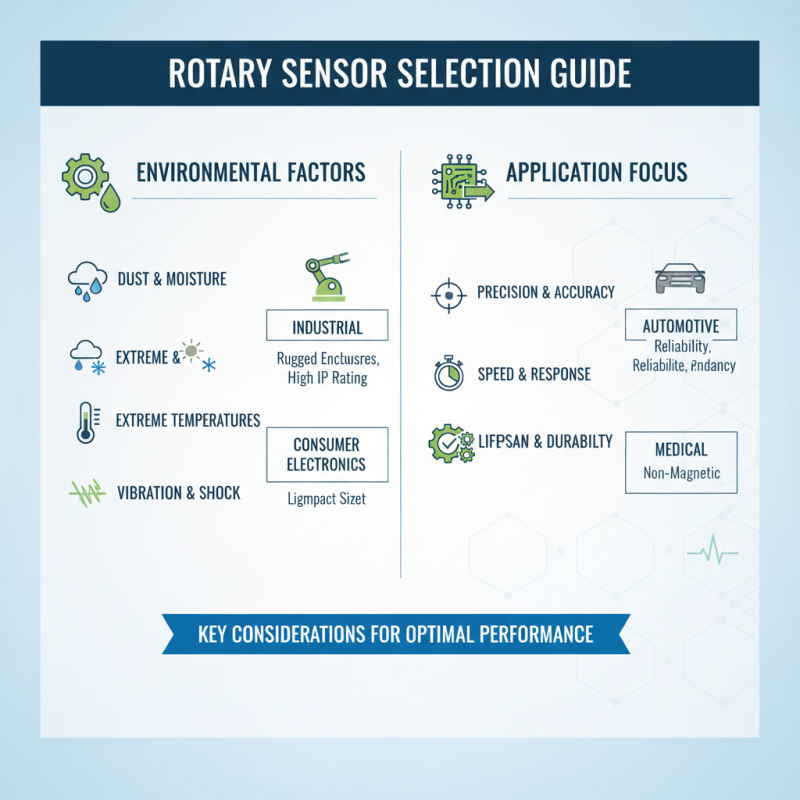
When selecting rotary sensors for various applications, several factors significantly influence the decision-making process. One primary consideration is the operational environment in which the sensor will be used. High levels of dust, moisture, or extreme temperatures can necessitate the selection of sensors with specific enclosures and protection ratings. For instance, applications in industrial settings may require rugged sensors designed to withstand harsh conditions, while those used in consumer electronics may prioritize compact size and lightweight features.
Another critical factor is the required accuracy and resolution of the sensor. Different applications, such as robotics, automotive, and industrial automation, demand varying levels of precision. For tasks that require exact positioning or speed measurements, selecting a rotary sensor with high resolution and minimal hysteresis is essential. Additionally, considerations regarding the type of output signal—analog or digital—and the sensor's compatibility with existing systems also play a vital role in the selection process. Ultimately, a thorough understanding of these factors ensures that the chosen rotary sensor meets the specific needs of the application while delivering optimal performance.
Future Trends in Rotary Sensor Technology and Innovations
As rotary sensor technology advances, several trends are shaping its future. One of the most significant innovations is the integration of smart technology, allowing sensors to communicate data in real-time via IoT (Internet of Things) frameworks. This development not only enhances automation processes but also enables predictive maintenance, reducing downtime and increasing efficiency in industrial applications. With smart algorithms, rotary sensors can analyze performance patterns, providing crucial insights for system optimization.
Another promising trend is the miniaturization of rotary sensors. Smaller, more compact designs enable these sensors to be integrated into a wider variety of applications, from consumer electronics to advanced robotics. This evolution is accompanied by a focus on energy efficiency, ensuring that these sensors not only perform well but also consume less power. As industries strive for sustainability, the demand for eco-friendly sensor technologies will continue to rise.
Tips: When selecting rotary sensors for your application, prioritize those with a robust design suitable for harsh environments, and ensure they are compatible with your existing systems. Additionally, consider the potential for future scalability – choosing sensors that can adapt to new technologies will save time and resources in the long run. Regularly monitoring technology trends will help you stay ahead and make informed decisions for your projects.
Case Studies Demonstrating the Effectiveness of Rotary Sensors
Rotary sensors, crucial in various industries, offer compelling case studies that illustrate their effectiveness across multiple applications. For instance, in the automotive sector, a case study showcased the use of rotary sensors in electric power steering systems. These sensors enable precise control of steering angles, enhancing both driver comfort and safety. By providing real-time feedback on wheel position, the sensors allow for an adaptive steering response, which can adjust based on driving conditions, improving handling and overall vehicle performance.
Another notable application of rotary sensors can be found in industrial automation. A case study demonstrated their implementation in a robotic assembly line, where precise angle measurements were critical for the accuracy of robotic arms. The rotary sensors enabled the arms to position components with high fidelity, reducing errors and increasing overall efficiency. This not only minimized waste and downtime but also allowed for greater flexibility in production processes, illustrating how rotary sensors can significantly enhance operational effectiveness in a competitive manufacturing landscape.
Exploring the Versatility and Benefits of the Dual Volume Adjustment Rotary Potentiometer RK097G for Enhanced Audio Control
The RK097G dual volume adjustment rotary potentiometer offers remarkable versatility and precision, making it an invaluable component in various audio control applications. As audio technology continues to evolve, the demand for superior control interfaces has surged. According to industry reports, the global potentiometer market is projected to grow at a CAGR of 4.5% from 2021 to 2026. This growth is driven by the expanding use of potentiometers in consumer electronics, automotive systems, and healthcare devices.
The RK097G is not only used for adjusting volume but also serves multiple functions, such as controlling light intensity, speed, pressure, and temperature. This multifunctionality enhances the user experience across a range of products, from audio amplifiers and speakers to home appliances and medical equipment. The ability to customize specifications allows manufacturers to tailor this component to fit their specific needs, ensuring compatibility and improved performance in diverse applications.
With its robust design and adaptability, the RK097G rotary potentiometer is positioned to meet the rigorous demands of modern electronic devices. Its applications extend to communication equipment and remote control systems, where precision and reliability are crucial. By integrating such advanced components, manufacturers can enhance the functionality of their products and improve user satisfaction, aligning with the growing focus on quality and performance in the electronics market.
FAQS
: Rotary sensors provide accurate angle and position measurements, enhancing operational efficiency and precision, which is crucial in sectors like robotics, automotive, and aerospace.
These sensors monitor the position of components such as throttle and gear shifts, ensuring enhanced safety and performance in vehicles and aircraft.
They can be integrated into diverse applications, from industrial machinery to consumer electronics, optimizing processes such as assembly lines and aiding in medical instrument navigation.
Rotary sensors offer unique advantages in measuring rotational movement, providing accurate feedback for applications such as robotics and automation, whereas linear sensors may be limited to specific setups.
Rotary sensors perform better in environments with dust, dirt, or moisture and require less maintenance, making them more favorable for reliable operation in manufacturing settings.
They provide precise control of steering angles, allowing for adaptive steering responses based on driving conditions, which enhances driver comfort and safety.
In a robotic assembly line, rotary sensors enable precise angle measurements for robotic arms, reducing errors and increasing efficiency in component positioning and production processes.
By providing real-time data and enhancing precision, rotary sensors minimize waste and downtime while increasing operational flexibility, resulting in improved production effectiveness.
The decision depends on specific application requirements, including accuracy, environmental conditions, and maintenance needs.
Their durability and robust design make them suitable for operations in extreme temperatures and outdoor machinery, ensuring uninterrupted and efficient performance.
Conclusion
Rotary sensors are crucial devices used to detect and measure the rotational position and angle of objects. They play a vital role across various industries due to their high precision, reliability, and versatility. The advantages of rotary sensors include their ability to provide accurate feedback in real-time, making them essential for applications in automation, robotics, automotive, and aerospace sectors. Common applications range from controlling motors and servos to enhancing functionality in smart devices.
When comparing rotary sensors to other types of sensors, their specialized functionality and adaptability often make them the preferred choice for applications requiring detailed rotational data. Factors influencing the selection of rotary sensors include their operational environment, required accuracy, and response time. With ongoing innovations and emerging technologies, the future of rotary sensors looks promising as they continue to evolve, offering advanced solutions that meet the growing demands of modern technology. Case studies highlight their effectiveness, showcasing their significant impact on efficiency and performance in various applications.

 +86 18928646960+86 13630152584
 Contact Email