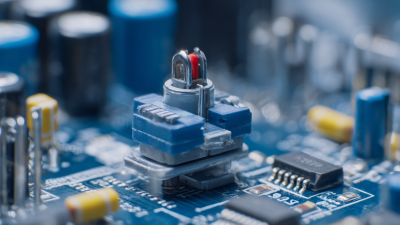
In today’s fast-changing world of electronics, picking the right switch potentiometer is super important if you want your devices to perform their best. I recently read a report by the Electronic Components Research Group, and it’s pretty clear that the market for potentiometers is expected to grow at about 5.2% annually from 2023 to 2028. That just goes to show how much people are craving more precision and reliability in their gadgets. Experts like Dr. John Simmons from Tech Innovation Labs often say that choosing the correct switch potentiometer can really make a difference—boosting both how well your project works and how dependable it is.

When it comes to suppliers, Foshan Apai Electronic Co., Ltd. is truly one of the big players in China. They’ve got this full-on approach where they handle everything—from researching and designing the products all the way to assembling finished units. That kind of all-in-one setup helps ensure top quality and means they can cater to different needs in the market. Of course, when you’re selecting a switch potentiometer, there are some key things to keep in mind like resistance value, taper type, and physical size. Getting a good handle on these details helps designers get the most out of their potentiometers and set their projects up for success.
Essential Factors to Consider When Selecting a Switch Potentiometer
When selecting a switch potentiometer for your project, it's crucial to consider several essential factors that will impact performance and functionality. The first factor is the resistance value, which determines how much voltage drop occurs across the potentiometer. Choosing the right resistance is vital for achieving the desired effect in your circuit, whether it’s for adjusting volume levels or controlling light brightness.
Another important aspect is the type of potentiometer. There are linear and logarithmic types, each suitable for different applications. For instance, linear potentiometers provide a constant change in resistance, while logarithmic types are commonly used for audio applications due to their alignment with human hearing perception.
Tips: When in doubt, it's often helpful to prototype with a few different potentiometer types to see which one best meets your needs. Additionally, pay attention to the physical dimensions and mounting style of the potentiometer, ensuring it fits well within your project’s setup. Lastly, consider the durability of the component, especially if it will be subjected to constant use or environmental conditions.
Understanding Different Types of Switch Potentiometers Available
When selecting the right switch potentiometer for your project, it's essential to understand the various types available. Switch potentiometers combine the functionality of a potentiometer with that of a switch, allowing for both variable resistance and the capability to toggle connections. The most common types include rotary and slide potentiometers, each offering distinct advantages depending on the application. Rotary potentiometers are often preferred for compact designs and are ideal for applications requiring fine-tuning, as they provide a smooth, continuous rotation, while slide potentiometers are excellent for applications where linear movement is more intuitive.
Additionally, you will encounter different configurations such as single-turn and multi-turn potentiometers. Single-turn models are suitable for basic applications where minimal adjustment is needed, while multi-turn potentiometers offer greater precision over a larger range of motion, making them invaluable in applications requiring subtler control, such as audio equipment and precision instruments. Considering the mounting styles—such as PCB mount or panel mount—is also crucial, as this impacts the ease of integration within your project. Understanding these various types ensures you select a switch potentiometer that not only fits your design requirements but also enhances the overall functionality of your project.
Evaluating the Electrical Specifications for Your Project Needs
When selecting a switch potentiometer for your project, evaluating the electrical specifications is crucial to ensure optimal performance and compatibility with your application. One of the primary specifications to consider is the resistance value, which is typically measured in ohms. According to a recent industry report by Digi-Key, most common values range from 1kΩ to 1MΩ, allowing engineers to choose a potentiometer that fits the specific voltage and current requirements of their circuit.
Another vital specification is the power rating, generally expressed in watts (W). The power rating indicates how much power the potentiometer can dissipate without overheating. For instance, a potentiometer rated at 0.5W can safely handle typical power levels in consumer electronics. The Electronic Industries Alliance (EIA) suggests that exceeding the specified power rating can lead to failure, significantly impacting your project's reliability. Additionally, consider the tolerance levels, often around 5% to 20%, which determine how accurately the potentiometer's resistance matches its labeled value, affecting the overall precision of the application.
The Impact of Potentiometer Size and Design on Functionality
When selecting the right switch potentiometer for your project, the size and design of the potentiometer play a crucial role in determining its overall functionality. A well-designed potentiometer can enhance the user experience by allowing for precise adjustments, while its physical size must complement the intended application. For instance, in compact electronic devices, space is often limited, necessitating smaller potentiometers that still provide reliable performance. On the other hand, larger potentiometers may be more suitable for projects where user engagement is vital, allowing for tactile feedback during operation.
At Foshan Apai Electronic Co., Ltd., we understand the significance of these factors and pride ourselves on being a leading enterprise in the sector within Chinese Mainland. Our comprehensive capabilities enable us to support the entire production chain, from research and development to mold creation and final assembly. This integrated approach ensures that our potentiometers are not only functionally robust but also tailored to meet the specific requirements of our clients' projects, ultimately enhancing both functionality and user satisfaction.
Key Brands and Models to Explore for Quality Switch Potentiometers
When selecting a switch potentiometer for your project, exploring reputable brands is essential to ensure quality and reliability. One prominent brand in the market is Bourns, known for its durable and versatile potentiometers suitable for various applications. Their products range from simple linear potentiometers to sophisticated multi-turn configurations, catering to both hobbyists and professionals. Bourns potentiometers are often praised for their smooth operation and long lifespan, making them a favorite among engineers.
Another key player is Alpha, recognized for their high-quality audio potentiometers. Alpha switch potentiometers are widely used in audio equipment, offering precise control and great sound quality. Their models come in various sizes and resistance values, ensuring compatibility with different circuit designs. Brands like Vishay also present reliable options with their high-performance potentiometers that can handle extreme environmental conditions, making them ideal for rugged applications. Exploring these brands and their models can significantly impact the success of your project, providing the performance and durability needed for reliable operation.
Common Applications for Switch Potentiometers in Various Projects
Switch potentiometers are versatile components that find application in various projects, making them essential for effective circuit design. One common application is in audio equipment, where switch potentiometers are used to adjust volume levels. By integrating these components, designers can create user-friendly interfaces that allow for precise control over sound output, enhancing the overall user experience. Additionally, they are frequently employed in home automation systems to manage lighting and other electrical devices, providing a simple way to regulate power levels.
Another area where switch potentiometers excel is in automotive applications. In vehicles, they can be utilized for controlling dashboard settings, such as adjusting air conditioning or entertainment systems. Their robust nature and reliability ensure consistent performance under different environmental conditions, which is crucial in automotive design. Furthermore, they can also be found in industrial machinery, where they help operators fine-tune equipment settings for optimal performance, showcasing their importance across a variety of technical fields.
FAQS
: The primary consideration is the resistance value, which determines the voltage drop across the potentiometer and affects the circuit's performance, such as volume control or brightness adjustment.
The two main types are linear and logarithmic potentiometers. Linear types provide a constant change in resistance, while logarithmic types are often used for audio applications to align with human hearing perception.
Prototyping with different types can help determine which potentiometer best meets the specific needs of your project, enhancing functionality and user experience.
The size and design impact user experience by facilitating precise adjustments and ensuring the component fits well within the intended application, especially in compact devices or for user engagement.
Switch potentiometers are commonly used in audio equipment to adjust volume levels, allowing users to have precise control over sound output.
They are used to manage lighting and other electrical devices, providing a simple method to regulate power levels.
In vehicles, they are used for controlling dashboard settings, such as air conditioning and entertainment systems, ensuring reliable performance in various environmental conditions.
They help operators fine-tune equipment settings for optimal performance, showcasing their importance in various technical fields.
It's essential to consider the potentiometer's durability, especially if it will be subjected to constant use or challenging environmental conditions.
They support the entire production chain from research and development to final assembly, ensuring their potentiometers are robust and tailored to client requirements for enhanced functionality and user satisfaction.
Conclusion
When selecting a switch potentiometer for your project, several essential factors must be considered to ensure optimal functionality. This includes understanding the different types available and evaluating their electrical specifications based on your project's specific needs. Additionally, the size and design of the potentiometer play a significant role in its performance, influencing how effectively it integrates into your system.
Foshan Apai Electronic Co., Ltd., as a leading enterprise in Chinese Mainland, excels in the development of high-quality switch potentiometers, offering a full supply chain from research and development to manufacturing. By exploring key brands and models, along with their common applications in various projects, you can make informed decisions that enhance the overall efficiency and effectiveness of your electronic designs.

 +86 18928646960+86 13630152584
 Contact Email