In today’s fast-moving world of audio tech and control systems, picking the right slide potentiometer really matters for making sure everything runs smoothly and users have a great experience. I mean, according to a report from MarketsandMarkets, the global market for potentiometers is expected to hit around USD 2.1 billion by 2026. That's mainly fueled by the rising demand for more advanced audio gear and consumer gadgets. Honestly, this just shows how important it is to be thoughtful when you’re choosing and adding slide potentiometers into your projects.
Industry veteran Dr. William Thompson, who’s pretty much a big deal in the world of electronic components design, stresses how crucial it is to pick the right potentiometer for what you’re doing. He says, “The accuracy and response time of your device really depend on the specs of the slide potentiometer you go with.” Whether you're working on pro audio setups like mixing consoles or building DIY control panels, knowing the key features—like resistance, taper type, and size—can make a big difference. It’s all about understanding what works best for your project.
So, whether you’re a professional audio engineer or just tinkering around with your own gadgets, paying attention to these critical parameters will help you make smarter choices and ensure your project ends up reliable and performing as it should. At the end of the day, selecting the right slide potentiometer isn’t just about the electrical specs; it’s also about how it all comes together to make the user experience better and more intuitive.
Understanding Slide Potentiometer Basics and Functionality
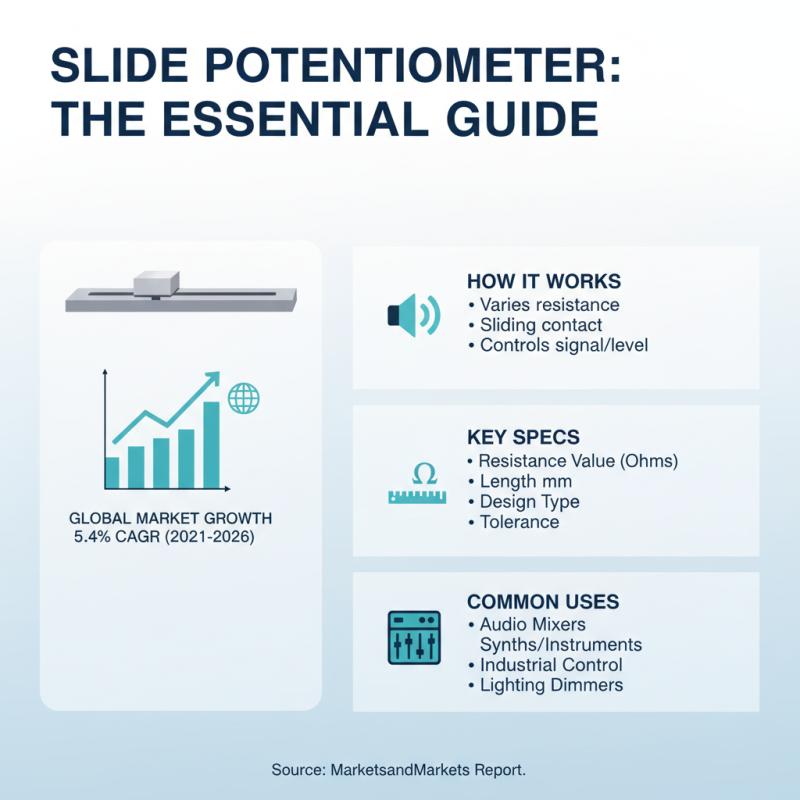
A slide potentiometer, commonly used in audio equipment and various electronic projects, operates by varying resistance based on the position of a sliding contact over a resistive element. It is crucial to understand the basic functionality and specifications of these components before selection, as they vary significantly in terms of resistance values, length, and overall design. According to a report by MarketsandMarkets, the global market for potentiometers, including slide types, is expected to grow at a CAGR of 5.4% from 2021 to 2026, which reflects their increasing use in different applications such as audio mixing consoles, electronic musical instruments, and industrial controls.
When choosing a slide potentiometer, one must consider the mechanical and electrical characteristics, such as taper type (linear or logarithmic), total resistance, and power rating, as these factors will greatly influence the performance of the device in the intended application. For instance, a linear taper is typically preferred for applications requiring precise level adjustments, while a logarithmic taper is more suitable for audio applications to match human perception of volume changes. Additionally, the length of the slide potentiometer can impact how fine-tuned the resistance adjustments are, with longer sliders allowing for more granular control. As per industry insights, utilizing the correct resistance value and taper improves the usability and satisfaction of end-users, underscoring the importance of making informed choices when integrating slide potentiometers into projects.
Key Specifications: Resistance Value, Linear vs. Logarithmic Taper
When selecting a slide potentiometer for your project, understanding the key specifications, particularly the resistance value and the type of taper, is crucial. The resistance value dictates how much electrical resistance the potentiometer offers, commonly measured in ohms. The appropriate resistance value often depends on the total impedance of your circuit; a typical range for audio applications is from 10k ohms to 100k ohms. According to industry reports, using a potentiometer with the correct resistance helps minimize noise and distortion, enhancing overall performance.
Another critical aspect to consider is the type of taper: linear or logarithmic. A linear taper potentiometer provides a uniform change in resistance, which is ideal for applications requiring precise control, such as in lighting dimmers or voltage dividers. In contrast, logarithmic potentiometers are better suited for audio applications, as they align more closely with the human ear's response to volume changes. A study found that using logarithmic tapers in audio circuits can yield smoother gradations in perceived volume, making your audio adjustments more intuitive.
Tips: When determining which taper to use, consider the nature of your audio signal and user interaction. An empirical approach by testing both types can provide insights specific to your project. Additionally, always check the manufacturer’s specifications for tolerance levels to ensure that the component will perform within your project’s requirements.
Determining the Right Size and Form Factor for Your Application
When selecting a slide potentiometer for your project, understanding the size and form factor is crucial for optimal integration and functionality. According to industry reports, the demand for compact designs in electronics has surged by 30% over the past five years, driving engineers to consider not only the electrical characteristics but also the physical dimensions of components. Slide potentiometers come in various sizes—from micro to standard—to accommodate different project needs. Choosing the right size can significantly affect user experience, especially in space-constrained applications like portable devices or specialized control panels.
Form factor also plays a pivotal role in the performance and usability of the slide potentiometer. Different designs, such as vertical or horizontal mounting, can influence not just the aesthetic of your device but also the ergonomics. Research indicates that user fatigue can increase by as much as 15% when controls are placed in awkward positions, which highlights the importance of selecting a potentiometer that fits comfortably within the layout of your application. Ensuring that the potentiometer aligns well with the user’s interaction points will make a substantial difference in both functionality and user satisfaction. Thus, evaluating both size and form factor early in your design process will lead to a more successful project outcome.
Evaluating Power Rating and Voltage Ratings for Optimal Performance
When selecting the appropriate slide potentiometer for your project, understanding the power rating and voltage ratings is crucial to ensure optimal performance. The power rating of a potentiometer usually indicates how much power it can dissipate without overheating. For most applications, particularly in audio and control circuits, a standard power rating of 0.1 to 2 watts is sufficient. However, for high-power applications, such as motor controls, opting for a potentiometer with a higher power rating may be imperative. Industry data suggests that a potentiometer with a power rating exceeding 1 watt is preferable for continuous operations, as it minimizes the risk of failure due to thermal overload.
Moreover, voltage ratings play a vital role in determining the suitable potentiometer for your device. Each slide potentiometer is designed to operate within a specific voltage range, typically rated between 5V and 50V. Selecting a potentiometer with a voltage rating higher than the maximum voltage in your circuit is essential to prevent damage and ensure reliable functionality. Reports indicate that exceeding the voltage rating can lead to significant performance issues, including distortion in audio devices and erratic behavior in analog circuits. Therefore, evaluating these ratings according to your project’s specific requirements will enhance the overall reliability and efficiency of your electronic designs.
How to Choose the Right Slide Potentiometer for Your Project - Evaluating Power Rating and Voltage Ratings for Optimal Performance
| Type |
Power Rating (W) |
Voltage Rating (V) |
Resistance (Ω) |
Length (mm) |
Notes |
| Sliding Potentiometer |
0.1 |
50 |
10k |
60 |
Commonly used for audio applications |
| Dual Gang Potentiometer |
0.1 |
50 |
50k |
100 |
Used for balance control in mixed signals |
| Heavy Duty Potentiometer |
1 |
250 |
5k |
120 |
Suitable for high power applications |
| Miniature Potentiometer |
0.05 |
20 |
1k |
30 |
Ideal for compact devices |
| Programmable Potentiometer |
0.1 |
30 |
10k |
75 |
Can be controlled digitally |
Material Considerations: Carbon vs. Conductive Plastic Types
When selecting a slide potentiometer for your project, understanding the material differences between carbon and conductive plastic types is crucial.
Carbon potentiometers are known for their reliability and cost-effectiveness. They are commonly used in applications where steady performance is required, such as audio equipment. However, they can suffer from wear and tear over time, which may lead to a decrease in performance and a shorter lifespan.
On the other hand, conductive plastic potentiometers offer superior performance and longevity. Their construction allows for smoother operation and less wear, making them an ideal choice for precision applications such as musical instruments and high-end audio systems. While they tend to be more expensive, the durability and reliability provided by conductive plastic can justify the investment in many projects.
Tips: Always consider the environmental conditions of your application. If your project will be exposed to moisture or dust, a conductive plastic potentiometer may be a safer choice to ensure consistent performance. Additionally, think about the tactile feel you desire; conductive plastic typically provides a smoother sliding action, which can enhance user experience. Finally, calculate your budget versus performance requirements to make an informed decision that best suits your project's needs.
Assessing Durability and Lifespan for Long-Term Reliability
When selecting a slide potentiometer for your project, assessing its durability and lifespan is crucial for ensuring long-term reliability. The materials used in the construction of the potentiometer play a significant role in its overall durability. Look for options that feature high-quality, resistant materials such as carbon, conductive plastic, or metal. These materials not only withstand frequent use but also maintain their performance over time, reducing the risk of wear or failure in demanding applications.
Additionally, consider the environmental factors that may influence the potentiometer's lifespan. Exposure to moisture, dust, and temperature fluctuations can lead to corrosion or degradation of the internal components. Selecting a slide potentiometer with appropriate environmental ratings, such as IP protection, can prevent these issues. It is also important to evaluate the potentiometer's mechanical specifications, including its rating for the number of cycles it can endure without performance degradation. By prioritizing these factors, you can choose a slide potentiometer that will provide reliable service throughout the entirety of your project's lifespan.
Application Examples: Audio Mixing, Consumer Electronics, and More
Slide potentiometers are versatile components widely used in various applications, including audio mixing and consumer electronics. In audio mixing, these devices allow for precise control over volume levels and sound blending. By moving the slider along the track, audio engineers can easily adjust the mix of different sound sources, ensuring the perfect balance for live performances or recordings. The tactile feedback provided by slide potentiometers enhances the user experience, enabling intuitive adjustments during critical moments.
In consumer electronics, slide potentiometers find their way into devices such as television remotes, sound systems, and personal gadgets. They often serve as volume controls or other adjustable settings, allowing users to manipulate their devices with ease. Their compact design makes them suitable for integration into slim electronics, while their durability ensures they can withstand frequent use. As technology advances, the role of slide potentiometers in providing seamless interaction with devices continues to grow, highlighting their importance across diverse applications.
Optimizing Audio and Visual Performance with the RK097GS A10K B10K Dual Gang Rotary Potentiometer
The RK097GS A10K B10K Dual Gang Rotary Potentiometer is designed to enhance audio and visual performance in a variety of applications. This component allows for precise adjustment of volume, light intensity, speed, pressure, and temperature, making it an essential element in the design of modern electronic devices. By integrating this potentiometer into audio amplifiers, speakers, and home appliances, manufacturers can ensure users receive a seamless experience, enhancing overall satisfaction and usability.
Originating from Guangdong, China, the RK097GS model offers customization options to suit specific requirements. With a minimum order quantity of 2000, this rotary potentiometer is an ideal choice for bulk purchasing, catering to the needs of businesses across various sectors including medical equipment and communication electronics. Its versatility and reliability make it a preferred component for remote control equipment as well, ensuring optimal performance in both consumer and professional environments.
FAQS
: A slide potentiometer is a variable resistor that changes resistance based on the position of a sliding contact over a resistive element, commonly used in audio equipment and electronic projects.
Important factors include mechanical and electrical characteristics such as taper type (linear or logarithmic), total resistance, length, and power rating, which significantly affect performance in various applications.
A linear taper is generally preferred for precise level adjustments, while a logarithmic taper is more suitable for audio applications due to its alignment with human perception of volume changes.
The length of the slide potentiometer influences the granularity of the resistance adjustments; longer sliders allow for more precise control over the settings.
Power ratings indicate how much power the potentiometer can handle without overheating, while voltage ratings determine the maximum operating voltage. Selecting appropriate ratings ensures optimal performance and reliability in your circuit.
For most audio and control circuits, a power rating between 0.1 to 2 watts is typically sufficient. Higher ratings are needed for high-power applications, such as motor controls.
Slide potentiometers are usually rated to operate within specific voltage ranges, typically between 5V and 50V. It is important to choose a potentiometer with a voltage rating higher than the maximum voltage in your circuit.
Slide potentiometers are widely used in applications such as audio mixing, consumer electronics, and devices that require adjustable settings, like volume controls in various gadgets and sound systems.
The tactile feedback from slide potentiometers allows audio engineers to make intuitive adjustments to volume levels and sound blending, which is crucial during live performances or recordings.
Their compact design facilitates integration into slim devices, and their durability ensures they can endure frequent use, making them ideal for applications such as remote controls and sound systems.
Conclusion
When selecting the right slide potentiometer for your project, it's crucial to understand its fundamental principles and functionalities. Key specifications, such as resistance value and the choice between linear and logarithmic taper, play a significant role in achieving desired performance. Additionally, the size and form factor of the potentiometer should align with your application's specific requirements, while also considering power and voltage ratings for optimal performance.
Material selection is another important aspect, with options like carbon or conductive plastic impacting durability and lifespan. When assessing the slide potentiometer for various applications, such as audio mixing or consumer electronics, it's essential to evaluate all these factors to ensure long-term reliability and functionality in your project. By carefully analyzing these elements, you can make informed decisions that enhance the overall effectiveness of your design.

 +86 18928646960+86 13630152584
 Contact Email