Picking the right Direct Slide Resistor for your project really matters if you want things to run smoothly and reliably. With the way the demand for top-notch electronic parts is growing, it’s interesting to see reports saying that the global resistor market is expected to grow around 5.2% between 2021 and 2026. That just highlights how important it is to choose components that not only tick all the technical boxes but also fit well with your innovative ideas.
Here at Foshan Apai Electronic Co., Ltd., we're pretty proud to be one of the leaders in this space in Mainland China. We have serious know-how in everything from product R&D to mold development and even assembling finished products. That means we can offer a wide range of high-quality Direct Slide Resistors, giving engineers and designers plenty of options to find the perfect match for their projects. In electronics, quality and reliability are everything, and picking the right resistor can really boost your project's efficiency and success. So, making informed decisions about your components is key in today’s competitive market.

Understanding Direct Slide Resistors and Their Applications
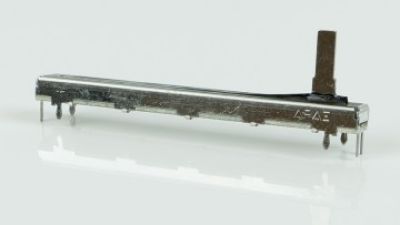
Direct slide resistors, often referred to as slide potentiometers, are crucial components in various electronic applications, particularly for audio and control systems. These components allow users to adjust resistance manually, thus enabling fine-tuning of voltage levels and signal amplitudes. Understanding the principles behind direct slide resistors is essential for selecting the right component for specific projects, whether it's for adjusting volume in an audio mixing console or for precision control in robotics.
When considering direct slide resistors, one should examine key characteristics such as resistance range, travel length, and physical dimensions. The application often dictates these factors; for instance, a longer travel distance may be advantageous in applications requiring gradual adjustments, while compact designs are preferable in space-limited situations. Additionally, it’s important to consider the electrical specifications, including power rating and expected lifespan, to ensure that the resistor can handle the operational demands of your device. Proper selection can significantly enhance usability and performance, making these components integral to effective project designs.
Key Specifications to Consider When Choosing a Direct Slide Resistor
When selecting a direct slide resistor for your project, it’s crucial to consider several key specifications to ensure optimal performance. Firstly, the resistance value is a primary factor; it’s essential to choose a resistor that provides the appropriate resistance to meet your circuit requirements. According to industry standards, the standard tolerance for resistors typically ranges from 1% to 5%, which can significantly impact the accuracy and reliability of your project.
Additionally, the power rating of the resistor is another critical specification. Overloading a resistor beyond its rated power can lead to thermal failure, making it vital to assess the maximum power the resistor can safely handle. For instance, resistors with a power rating of 1W-2W are suitable for low-power applications, while high-performance projects may require resistors rated at 10W or more, as highlighted in the 2023 Resistor Market Report.
At Foshan Apai Electronic Co., Ltd., our expertise in the complete product development chain ensures that our direct slide resistors meet these essential specifications and industry standards. Our commitment to quality manufacturing processes enables us to produce resistors that not only adhere to precise tolerance levels but also excel in power handling capabilities, thereby enhancing the reliability of your projects.
Analyzing Resistance Range and Tolerance for Your Project Needs
When selecting the right direct slide resistor for your project, it's crucial to analyze both the resistance range and tolerance. Resistance range refers to the values between which the resistor can operate effectively. According to a report by Market Research Future, the global resistor market is expected to reach $20 billion by 2026, highlighting the increasing demand for precise resistance control in various applications, from consumer electronics to automotive systems.
Tolerance, on the other hand, indicates the acceptable deviation from the nominal resistance value, which is critical for achieving desired performance in any circuit. High-quality resistors typically offer tolerances as low as 1% or even 0.1% for precision applications. Companies like Foshan Apai Electronic Co., Ltd. ensure that you have access to a diverse selection of resistors with varying resistance ranges and tolerances tailored to meet specific project requirements. With our comprehensive capabilities from R&D to finished product assembly, we can help you select the appropriate resistor that meets both performance and budgetary needs effectively.
Evaluating Power Rating and Heat Dissipation of Slide Resistors
When selecting a direct slide resistor, understanding power rating and heat dissipation is crucial for optimal performance in your project. Power ratings, typically expressed in watts, dictate the maximum amount of power a resistor can handle before overheating. According to industry reports, resistors rated for 1 watt or more can typically handle moderate applications, while higher-rated resistors (5 watts and above) are necessary for better heat management in high-power scenarios. Failure to choose a resistor with an appropriate power rating can lead to thermal runaway, prematurely damaging components and risking project integrity.
Heat dissipation is another vital factor to consider. Resistors convert excess power into heat, requiring adequate dissipation methods to maintain performance and longevity. Thermal resistance ratings provide insights into how well a resistor can manage heat, with lower thermal resistance values indicating better heat management. A recent study indicated that a resistor with a thermal resistance of 40 °C/W is better suited for high-temperature environments compared to one rated at 100 °C/W. Understanding these parameters allows engineers to make informed decisions, leading to more reliable and efficient circuits.
Power Rating and Heat Dissipation of Direct Slide Resistors
Choosing the Right Material for Durability and Performance
When selecting a direct slide resistor for your project, the choice of materials plays a critical role in ensuring both durability and performance. High-quality materials not only enhance the lifespan of the resistor but also ensure it can withstand varying temperatures and electrical loads without degradation. For instance, resistors made from high-temperature ceramics or advanced polymer compounds may offer improved stability and resistance to environmental factors compared to standard options. As a result, it's essential to evaluate the specific requirements of your project when determining the appropriate material composition.
At Foshan Apai Electronic Co., Ltd., we pride ourselves on providing top-notch components to meet diverse project needs. As a leading enterprise in the Chinese Mainland, our comprehensive capabilities encompass the entire production chain—from research and development to mold creation, parts manufacturing, and final assembly. This integrated approach ensures not only high-quality resistors that meet rigorous performance standards but also a consistent supply of durable components tailored to your specifications. By choosing us, you can be confident in the reliability and performance of your direct slide resistors.
Identifying Compatibility with Circuit Design and Components
When selecting a direct slide resistor for your project, understanding its compatibility with your circuit design and other components is crucial. Begin by assessing the resistive value required for your specific application. Different designs may demand varying resistances to achieve the desired voltage or current control. Make sure to match the resistor’s specifications with the functional requirements of your circuit to ensure optimal performance.
Next, consider the physical dimensions and power rating of the resistor. This aspect influences not only how well the resistor fits within your project’s layout but also its ability to handle the power without overheating. Pay attention to the maximum wattage rating of the resistor to avoid potential damage due to excessive power dissipation. Additionally, evaluate the tolerance levels, as these can affect the precision of your circuit. Ensuring that the resistor is compatible with both the electrical and physical parameters of your design will contribute significantly to the stability and reliability of your project.
Assessing the Manufacturer's Reputation and Product Quality
When selecting a direct slide resistor for your project, evaluating the manufacturer's reputation is crucial. A well-established brand often signifies reliability and adherence to industry standards. Manufacturers with a long history and positive reviews are more likely to produce high-quality products that meet rigorous performance criteria. Checking for certifications, industry partnerships, and awards can further validate the credibility of the manufacturer.
In addition to reputation, product quality must be closely examined. This includes assessing materials used, construction techniques, and specifications of the resistors. High-quality slide resistors should demonstrate durability, accurate resistance values, and consistent performance across various conditions. Reviewing customer testimonials, technical datasheets, and product warranties can provide insight into the quality of the resistors offered by a manufacturer. By prioritizing both reputation and product quality, you can ensure your project’s success and longevity.
Essential Guide to Choosing and Using the Single Mixer Fader and Slide Potentiometer for Optimal Audio Control
When it comes to optimal audio control, the single mixer fader and slide potentiometer play a pivotal role in various applications spanning audio amplifiers, speakers, and even medical equipment. Understanding how to choose the right potentiometer can significantly enhance performance across these devices. The APAI SC6021N model, produced in Guangdong, China, offers excellent customization options, allowing users to tailor it to specific needs. This makes it an ideal choice for diverse applications including remote control systems and home appliances.
Sliding potentiometers like the SC6021N are not only designed for adjusting volume, but they also provide flexibility in controlling light, speed, pressure, and temperature. With a minimum order quantity of 2000, these components are built for scalability, ensuring that businesses can meet larger project demands without compromising on quality. By utilizing a high-quality potentiometer, audio professionals and engineers can achieve precise control, leading to enhanced sound clarity and overall user satisfaction in both consumer and commercial products.
FAQS
: Power rating indicates the maximum amount of power a resistor can handle before overheating, which is crucial for optimal performance in your project.
Resistors rated for 1 watt or more are suitable for moderate applications, while those rated at 5 watts and above are needed for better heat management in high-power scenarios.
Choosing a resistor with an insufficient power rating can lead to thermal runaway, potentially damaging components and compromising project integrity.
Resistors convert excess power into heat, requiring effective heat dissipation methods to maintain performance and longevity.
Thermal resistance ratings provide insights into a resistor's heat management capabilities, with lower values indicating better heat dissipation.
A resistor with a thermal resistance of 40 °C/W is better suited for high-temperature environments compared to one rated at 100 °C/W.
A well-established brand often signifies reliability and adherence to industry standards, which increases the likelihood of high-quality products.
Factors include materials used, construction techniques, specifications, durability, accurate resistance values, and consistent performance.
They provide insight into the quality and performance of resistors, helping you make informed decisions for your project.
Checking for certifications, industry partnerships, and awards can further confirm the credibility and quality of the manufacturer.
Conclusion
Choosing the right Direct Slide Resistor for your project is essential for achieving optimal performance and reliability. Understanding the various applications of Direct Slide Resistors helps in identifying the best fit for your specific needs. Key specifications such as resistance range, tolerance, and power rating are critical factors that must be evaluated to ensure that the resistor aligns with your project requirements. Additionally, the material used in the construction of the resistor plays a significant role in both durability and overall performance.
Compatibility with your circuit design and components cannot be overlooked; selecting a Direct Slide Resistor that integrates seamlessly with existing elements is paramount. Lastly, considering the manufacturer's reputation, such as Foshan Apai Electronic Co., Ltd., known for its comprehensive capabilities from R&D to assembly, ensures that you are investing in high-quality products that will withstand the demands of your project. This holistic approach guarantees that your choice of Direct Slide Resistor will contribute to the success of your overall design.

 +86 18928646960+86 13630152584
 Contact Email