inquiry
Leave Your Message
0%

Picking out the right incremental encoder for your project in 2025 isn’t just a small detail—it's a pretty big deal that can really influence how well your system runs and how efficient it is. As tech keeps moving forward, the need for precise, reliable motion control has become more important than ever. That’s why engineers and developers are always on the lookout for the best incremental encoders suited for their specific applications. These little guys are super crucial across so many industries—think robotics, manufacturing, you name it—helping you keep track of position and speed with spot-on accuracy.

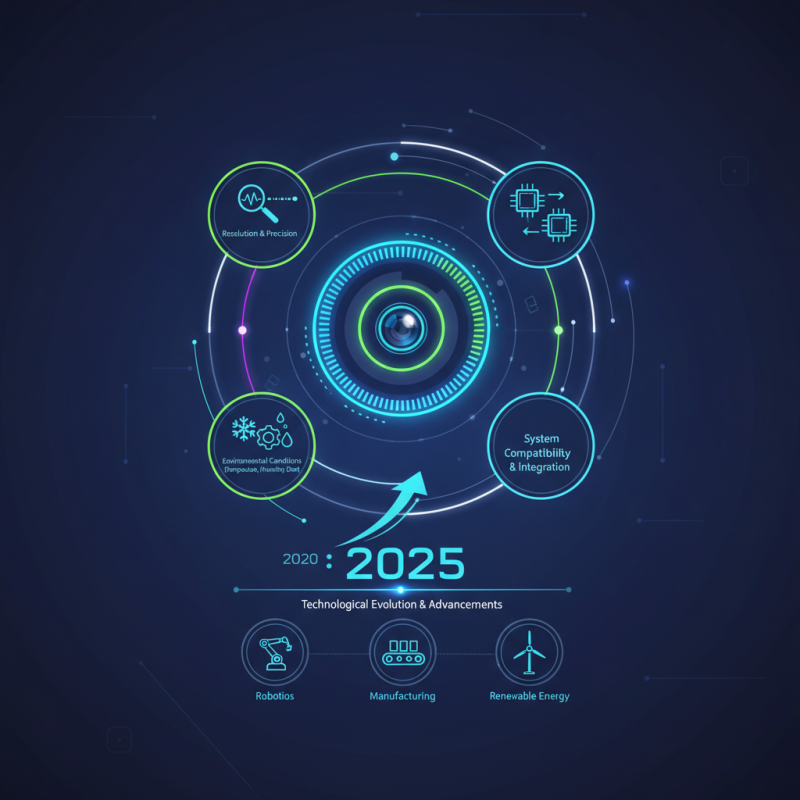
In this guide, I’ll walk you through what to think about when choosing an encoder tailored to your needs. Things like resolution, the environmental conditions it’ll face, and how well it plays with your existing systems are all things you should keep in mind to make sure you get the right fit. 2025 is bringing some fresh challenges, sure, but also exciting opportunities in motion control tech. So it’s really important to stay in the know about the latest and greatest in incremental encoder design. When you understand your project’s unique needs and look at the options out there, making an informed choice becomes a lot easier—and ultimately, it’ll help your project perform at its best and be a real success.
How to Choose the Right Incremental Encoder for Your Project in 2025

Understanding Incremental Encoders: Basics and Types

Incremental encoders are essential components in many automation and control systems, providing vital feedback about the position and movement of machinery. These devices come in various types, primarily categorized as optical, magnetic, and capacitive encoders. Each type operates on different principles: optical encoders use light to detect position changes, magnetic encoders rely on magnetic fields, while capacitive encoders sense changes in capacitance due to the movement of the encoder's disk.

When choosing the right incremental encoder for your project, it is important to understand these basic distinctions along with their respective advantages. Optical encoders are often favored for their high resolution and accuracy, making them ideal for applications requiring precise positioning. On the other hand, magnetic encoders offer robustness in harsh environments and can function well in applications where dust or moisture is present. Capacitive encoders, while less common, excel in applications where space is limited and can provide reliable performance in compact designs. Understanding these basics will guide you in selecting the most suitable encoder that meets the needs of your specific application.

Understanding Incremental Encoders: Basics and Types

Key Factors to Consider Before Selecting an Incremental Encoder

When selecting the right incremental encoder for your project, it’s essential to consider several key factors that can significantly impact its performance and suitability. First, evaluative specifications such as resolution, output type, and interface are crucial. The resolution determines the encoder's ability to provide precise position feedback, affecting the overall accuracy of your system. Additionally, the choice between different output types (like digital or analog) and interfaces (like quadrature or serial) should align with your project’s requirements for data processing and integration.

Another critical factor is environmental conditions. Depending on the application, the encoder may be exposed to extreme temperatures, dust, or moisture. Selecting an encoder with the appropriate ingress protection (IP) rating and operational temperature limits is necessary to ensure durability and long-term reliability. Furthermore, understanding the torque and speed requirements of your system is vital to ensure that the encoder can operate effectively within the specified limits, thus preventing premature wear or failure. Thoughtful consideration of these aspects will help you make an informed decision that enhances your project's success.

Comparing Resolution and Accuracy in Incremental Encoders

When selecting an incremental encoder for your project, understanding the relationship between resolution and accuracy is crucial. Resolution refers to the smallest change in position that the encoder can detect, typically measured in counts per revolution (CPR). Higher resolution allows for finer position control, making it ideal for applications requiring precise movement, such as robotics and CNC machinery. However, simply increasing the resolution does not guarantee enhanced accuracy; it merely improves the granularity of the output signals.

Accuracy, on the other hand, encompasses not only the resolution but also the encoder's ability to provide correct position readings under various conditions. Factors such as mechanical backlash, temperature fluctuations, and electrical noise can affect accuracy. Therefore, when evaluating encoders, it’s essential to consider both the specified resolution and the potential environmental influences that may compromise accurate performance. A balance between high resolution and proven accuracy should guide your choice, ensuring the encoder effectively meets the project's demands without introducing errors in position sensing.

Interfacing Options: Choosing the Right Communication Protocol

When selecting an incremental encoder for your project in 2025, one of the most important factors to consider is the interfacing options, particularly the communication protocols available. The choice of communication protocol can significantly impact the performance and reliability of the encoder in various applications. For instance, protocols such as SSI (Synchronous Serial Interface) and SPI (Serial Peripheral Interface) are popular for their high-speed data transfer capabilities, allowing for real-time feedback in automated systems. According to industry reports, about 60% of engineers prefer protocols like SPI due to its versatility and ease of integration into microcontroller systems.

In addition to SSI and SPI, protocols such as CAN (Controller Area Network) are making strides in industries that require robust error handling and complex networking. A recent survey found that over 40% of projects in the automotive sector opted for CAN-enabled encoders due to their reliability and support for long-distance communication. Furthermore, emerging protocols like EtherCAT are gaining traction in industrial automation, with projections indicating a 20% increase in usage by 2025. This is largely driven by the demand for faster data processing and improved efficiency in smart manufacturing environments. Selecting the right communication protocol, therefore, is crucial for optimizing both encoder performance and overall system effectiveness in your upcoming projects.

Power Supply and Environmental Considerations in Encoder Selection

When selecting an incremental encoder for your project in 2025, power supply and environmental considerations are critical factors that can significantly affect performance and longevity. According to recent industry reports, nearly 30% of encoder failures are attributed to inadequate power supply management and environmental factors such as temperature and humidity. Therefore, understanding the power requirements is essential. Most encoders operate with a voltage range of 5V to 30V, and ensuring a stable power supply within this range can help mitigate issues like signal degradation and noise interference that can lead to inaccurate readings.

Environmental factors also play a crucial role in the functionality of incremental encoders. Encoders are often subjected to harsh conditions, such as extreme temperatures, moisture, and dust, which can limit their operational lifespan. A study conducted by the International Society of Automation (ISA) indicates that encoders rated for specific environmental standards, such as IP67 for dust and water resistance, can perform significantly better in challenging settings. Additionally, non-contact encoders are increasingly recommended for applications where cleanliness and maintenance are priorities, as they reduce wear and susceptibility to environmental damage. With projected growth in automation technologies, making informed decisions based on these considerations will help ensure reliable encoder performance in the years to come.

Evaluating Cost vs Performance for Your Specific Application

How to Choose the Right Incremental Encoder for Your Project in 2025

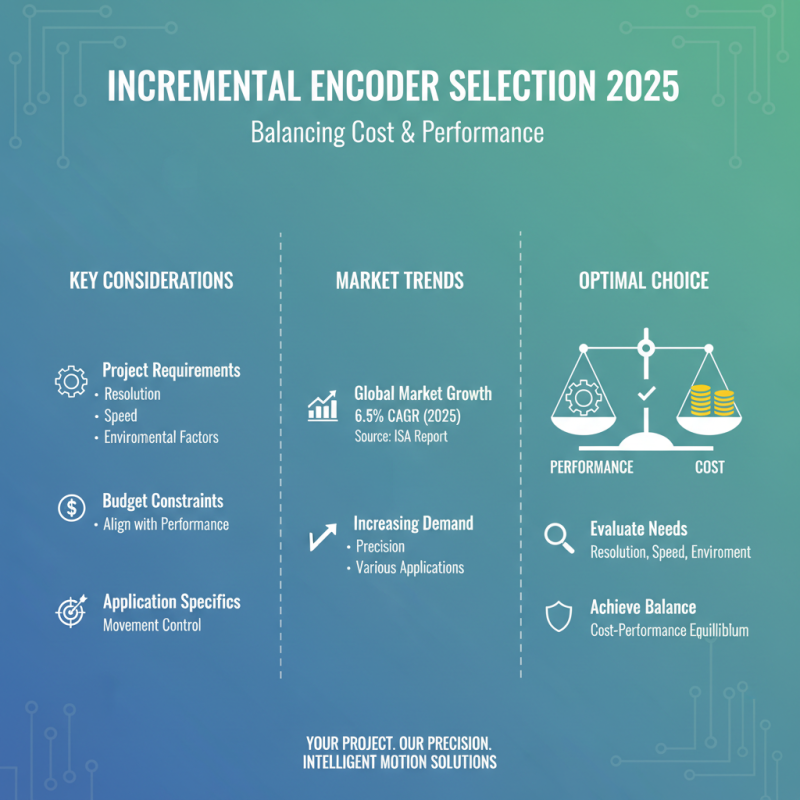
When selecting an incremental encoder for your project in 2025, the balance between cost and performance is critical. According to a recent industry report by the International Society of Automation, the global market for encoders is projected to grow at a CAGR of 6.5%, highlighting the increasing demand for precision movement control in various applications. Evaluating the specific requirements of your project, such as resolution, speed, and environmental factors, allows you to align your encoder choice with your budget constraints while still achieving optimal performance.

Tips: Always begin with a clear definition of your project needs. Identify the required resolution based on the application’s accuracy and detail levels. This will help you avoid overspending on an encoder with unnecessary features that do not contribute to your objectives.

Another consideration is the operating environment. Encoders designed for rugged conditions might be priced higher but can save costs in the long run by reducing maintenance and replacement frequency. A study by the National Electrical Manufacturers Association indicates that encoders operating under extreme conditions can have failure rates exceeding 30% compared to their more robust counterparts. Investing in high-performance encoders that are tailored to your specific environment will ensure longevity and reliability in your application.

Tips: Conduct thorough environment assessments and consider factors such as temperature fluctuations, humidity, and potential exposure to contaminants. Understanding these will guide your selection towards encoders that offer advanced protective features, ensuring consistent performance and value for your investment.

Future Trends in Incremental Encoder Technology for 2025

How to Choose the Right Incremental Encoder for Your Project in 2025

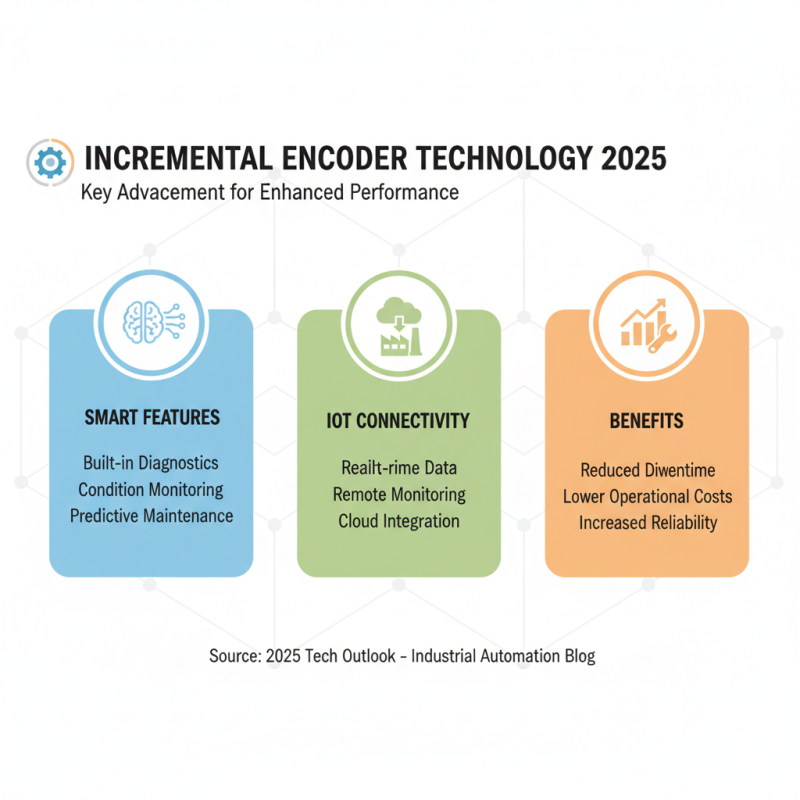
As we look toward 2025, the field of incremental encoder technology is poised for significant advancements. One emerging trend is the integration of smart features that enhance performance and reliability. Encoders are increasingly being designed with built-in diagnostics and condition monitoring systems, allowing users to predict failures and perform maintenance proactively, which ultimately reduces downtime and operational costs. The incorporation of IoT connectivity is also expected to play a pivotal role, enabling real-time data transfer and remote monitoring capabilities.

Another noteworthy trend is the miniaturization of incremental encoders, which facilitates their use in more compact applications without compromising precision or durability. This evolution is driven by the demand for smaller, lightweight machinery in industries such as robotics and automation. Additionally, advancements in materials and manufacturing processes are enabling the production of encoders that can withstand harsh environments, broadening their applicability across various sectors. In conclusion, the future of incremental encoder technology in 2025 will be marked by smarter, more resilient designs tailored to meet the growing demands of a diverse range of industries, ensuring better performance in increasingly miniaturized systems.

FAQS

: What factors should be considered when selecting an incremental encoder?

: Key factors include power supply stability, environmental conditions (such as temperature and humidity), the encoder's operational lifespan, and the specific requirements of the project like resolution and speed.

What is the typical voltage range for most encoders?

Most encoders operate within a voltage range of 5V to 30V, and ensuring a stable power supply within this range is essential for optimal performance.

How do environmental factors affect encoder performance?

Harsh conditions like extreme temperatures, moisture, and dust can limit the operational lifespan of encoders. Encoders with specific environmental ratings, such as IP67, tend to perform better in challenging settings.

What is the significance of evaluating cost vs performance for encoders?

Balancing cost and performance helps align your encoder choice with budget constraints while ensuring that the encoder meets the specific requirements of your application, including accuracy and durability.

Why might it be beneficial to invest in high-performance encoders?

Although high-performance encoders may have a higher upfront cost, they can save on long-term maintenance and replacement costs by reducing failure rates, particularly in extreme operating conditions.

What emerging trends are expected in incremental encoder technology by 2025?

Key trends include the integration of smart features for diagnostics and condition monitoring, IoT connectivity for real-time data transfer, and miniaturization for compact applications.

How can understanding environmental factors guide encoder selection?

Conducting thorough assessments of environmental conditions such as temperature fluctuations, humidity, and exposure to contaminants helps to choose encoders with appropriate protective features, ensuring reliable performance.

What advantages do non-contact encoders offer?

Non-contact encoders reduce wear and tear, are less susceptible to environmental damage, and are thus recommended for applications where cleanliness and low maintenance are priorities.

Why is built-in diagnostics important for encoders?

Built-in diagnostics enable users to predict failures and perform proactive maintenance, which can significantly reduce downtime and operational costs.

How has miniaturization influenced encoder design?

The trend towards smaller, lightweight machinery has driven the miniaturization of encoders, allowing their use in compact applications without sacrificing precision or durability.

Conclusion

In "How to Choose the Right Incremental Encoder for Your Project in 2025," the article provides a comprehensive guide to understanding and selecting incremental encoders. It begins by explaining the basics and various types of incremental encoders, which are crucial for applications requiring precise motion control. Key factors such as resolution, accuracy, and interfacing options are highlighted, emphasizing the importance of choosing the right communication protocol to ensure compatibility with existing systems.

The article further discusses the significance of power supply requirements and environmental conditions, which can impact the encoder's performance. Additionally, it evaluates the cost versus performance trade-offs, helping readers make informed decisions based on their specific application needs. As technology advances, future trends in incremental encoder technology for 2025 are also examined, equipping engineers and designers with the knowledge to select the most suitable encoder for their projects.

Ethan

Ethan

Ethan is a dedicated marketing professional at our company, recognized as a leading enterprise in the Chinese Mainland. With extensive expertise in our product lines, he plays a vital role in showcasing the strengths of our comprehensive business model, which encompasses everything from product......
Previous Unlocking Precision: How the Switch Potentiometer Revolutionizes Control Systems