inquiry
Leave Your Message
0%

Optical encoders have pretty much become a staple in many industrial setups these days. They’re crucial for giving accurate info on position and speed, especially in automated systems. If you’ve seen industry reports, you’ll notice that the global market for optical encoders is expected to hit around $2 billion by 2026. And it’s growing at roughly 6% annually since 2021. A lot of this growth comes down to automation—companies are always looking for smarter, more reliable ways to run things—and tech improvements are making encoders more precise and trustworthy than ever.

When you look at the different types of optical encoders—like incremental and absolute—they’re used in all sorts of fields: robotics, aerospace, cars, even gadgets for everyday consumers. Take aerospace, for example; a recent study by Research and Markets points out that optical encoders are becoming a big deal in flight control systems because tracking movement with high accuracy is super important there. Plus, with Industry 4.0 taking off, the use of optical encoders has skyrocketed since they’re key to linking machines and smart tech together smoothly.

As demand for better, more energy-efficient tech keeps climbing, it’s pretty important for engineers and industry pros to get a good handle on the different types of optical encoders and where they’re used. This article is here to help clarify the most common kinds and how they’re actually used in real-world scenarios—showing how they’re pushing automation and control systems forward across all sorts of industries.

Top Optical Encoder Types and Their Applications Explained

Overview of Optical Encoders and Their Importance in Automation

Optical encoders play a crucial role in the world of automation, translating mechanical movements into digital signals. This conversion is essential for precise control in various applications, ranging from robotics to manufacturing equipment. According to a report by MarketsandMarkets, the global optical encoder market is projected to reach $4.63 billion by 2026, reflecting a compound annual growth rate (CAGR) of 6.2% from 2021. This growth indicates a rising demand for accuracy and reliability in automation systems, where the need for real-time positioning and speed feedback is paramount.

The importance of optical encoders lies in their ability to provide high resolution and precision in motion control. Unlike traditional mechanical encoders, optical encoders use light interference to achieve finer measurements, making them ideal for high-performance applications. Data from a study by ResearchAndMarkets highlights that sectors like robotics, aerospace, and healthcare are increasingly adopting optical encoders, driven by the need for enhanced automation. In manufacturing, for instance, optical encoders facilitate smooth operation and improved efficiency, allowing for tighter tolerances and better overall system performance. These advancements underscore the critical role that optical encoders play in advancing automation technologies, ensuring both reliability and productivity.

Optical Encoder Types and Their Applications

This chart illustrates the distribution of applications for various types of optical encoders commonly used in automation. The data showcases how different encoder types are utilized across different sectors, highlighting their importance in precision and control within automated systems.

Different Types of Optical Encoders: A Comprehensive Classification

Optical encoders are essential devices used primarily in motion control systems, providing feedback on position, speed, and direction. They can be categorized into various types based on their operating principles and applications. The two main classifications are absolute and incremental encoders.

Absolute encoders provide a unique position value within a single rotation, making them invaluable in applications where precise positioning is critical, such as robotics and satellite tracking. Conversely, incremental encoders measure changes in position and are widely used in applications where relative movement is sufficient, such as conveyor systems and motor control.

According to a recent market report by Grand View Research, the optical encoder market is projected to grow significantly, driven by advancements in automation and the demand for high-precision manufacturing. The rise of Industry 4.0 technologies continues to fuel the need for accurate feedback systems, highlighting the importance of optical encoders in modern industrial applications.

As industries adopt these technologies, they enable improved operational efficiency and reduced downtime.

Tips: When selecting an optical encoder, consider factors such as resolution, environmental conditions, and interface compatibility to ensure optimal performance. Also, keeping in mind installation guidelines can significantly enhance the durability and accuracy of the encoder in its working environment.

Working Principles of Incremental Optical Encoders Explained

Incremental optical encoders operate on the principle of translating rotary or linear movement into digital signals through the use of light. These encoders consist of a light source, typically an LED, a rotating disk with carefully spaced patterns, and a photodetector. As the disk rotates, the light passes through the transparent and opaque sections, creating a series of light pulses that the photodetector captures. The frequency of these pulses correlates directly to the speed of movement, while the number of pulses provides positional information.

Tips: When selecting an incremental optical encoder, consider the resolution you need for your application. Higher pulse counts can provide finer control and accuracy, but they may also introduce greater complexity in processing the data. Make sure that your encoder design accommodates the speed and range of motion of your system to ensure optimal performance.

This technology is used across various industries, from robotics and automation to computer mouse design. The ability to measure displacement continuously makes incremental optical encoders invaluable in applications where precise position control is crucial. By understanding their working principles, engineers can better implement these encoders to enhance the accuracy and efficiency of their systems and processes.

How Absolute Optical Encoders Function and Where They're Used

Top Optical Encoder Types and Their Applications Explained

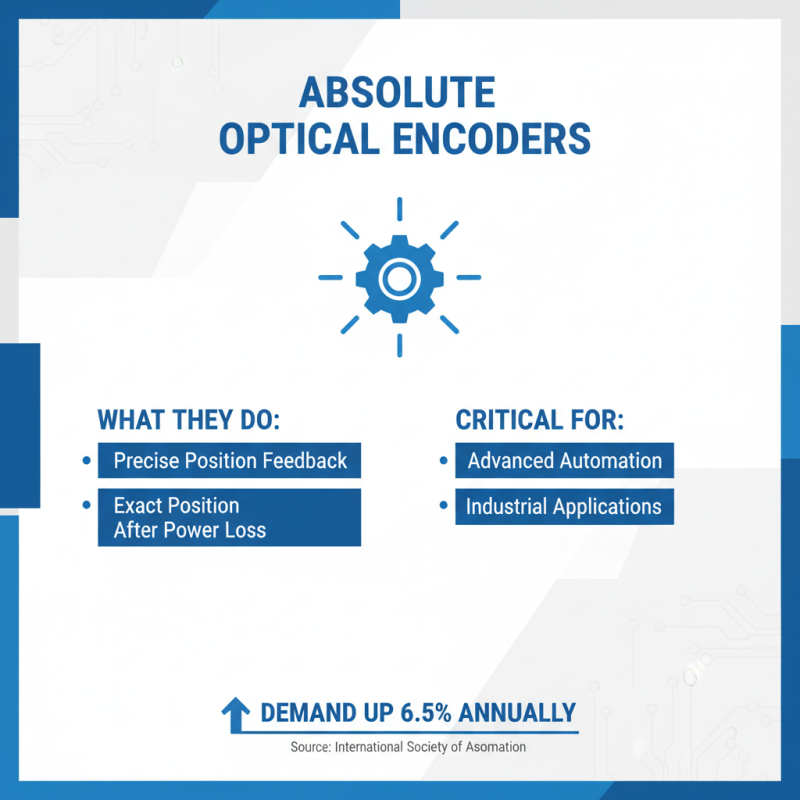
Absolute optical encoders are vital components in advanced automation systems, providing precise position feedback in various industrial applications. These encoders utilize a unique coding technique that ensures the exact position of a shaft is known, even after power loss. As per a report from the International Society of Automation, the demand for absolute optical encoders is expected to rise by 6.5% annually, reflecting their critical role in applications that require accuracy and reliability.

Typically found in robotics, CNC machinery, and aerospace systems, absolute optical encoders offer distinct advantages over their incremental counterparts. They produce a unique digital value representing the position of the encoder's rotor, eliminating any ambiguity in position data. This feature is especially important in applications such as robotics, where precise control of motion is necessary to achieve desired tasks with minimal error, as highlighted in a recent market analysis by Reports and Data, which forecasts a significant growth increment in industries harnessing encoder technology for automation.

The ability to maintain position data without needing a reference point after power disruptions significantly enhances operational efficiency in manufacturing environments. In automotive assembly lines, for instance, absolute encoders assist in ensuring that each component is accurately placed, contributing to high-quality output and reduced production time. Such advantages underscore the critical importance of absolute optical encoders across various sectors, making them a preferred choice where precision and reliability are non-negotiable.

Applications of Optical Encoders in Robotics and Industrial Automation

Top Optical Encoder Types and Their Applications Explained

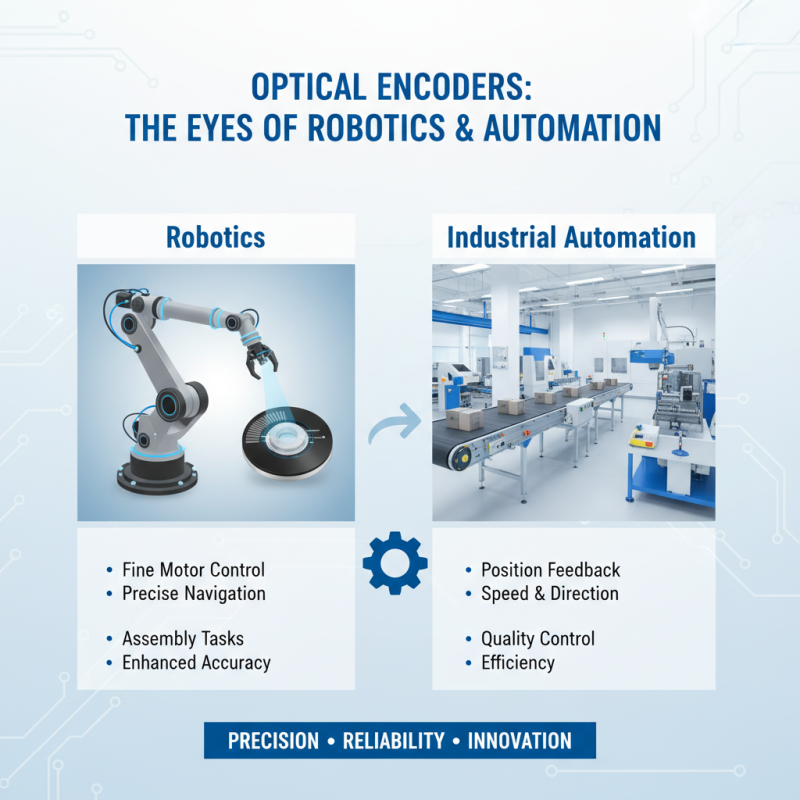
Optical encoders play a crucial role in the fields of robotics and industrial automation, providing precise feedback regarding position, speed, and direction of movement. In robotics, these encoders are integral for tasks that require fine motor control and accuracy. For instance, robotic arms equipped with optical encoders can achieve intricate movements necessary for assembly tasks, enhancing both efficiency and precision in manufacturing environments. This precision is vital, as even minor deviations in robotic movement can lead to significant errors in production.

In industrial automation, optical encoders contribute significantly to the monitoring and control of machinery. They can tirelessly track rotations of motors in conveyor systems or provide positional feedback for automated guided vehicles. As a result, they help maintain optimal performance by ensuring machines operate within designated parameters. Moreover, their ability to operate in various environments, including harsh industrial settings, underscores their versatility and reliability in automation applications.

Tip: When selecting an optical encoder for specific applications, consider the required resolution and environmental conditions. Higher resolution encoders offer more precise feedback but may come at an increased cost. Additionally, ensure that the encoder is suitable for the operational environment to prevent issues related to dust, moisture, or temperature variations.

Recent Innovations and Trends in Optical Encoder Technology

Recent advancements in optical encoder technology have significantly enhanced their performance and applicability across various industries. One of the key innovations is the integration of advanced signal processing algorithms, which enable higher precision and resolution in measurements. These algorithms allow for the filtering of noise and improved accuracy in real-time applications, making optical encoders more reliable for tasks such as motion control in robotics and automation.

Another trend is the miniaturization of optical encoders, driven by the demand for compact and efficient designs in modern electronics. This has led to the development of smaller form factors that retain high performance, making them ideal for applications in medical devices, consumer electronics, and aerospace. Additionally, improvements in materials and manufacturing processes have contributed to the durability and longevity of these devices, ensuring they can operate effectively in challenging environments. As a result, optical encoders are becoming increasingly vital in sectors requiring high precision and reliability.

Challenges and Considerations When Selecting Optical Encoders

When selecting optical encoders for various applications, several challenges and considerations must be taken into account to ensure optimal performance and reliability. One of the primary factors is resolution. Higher resolution encoders offer more precise measurements, which can be critical in applications requiring fine movement control. However, choosing an encoder with too high a resolution can lead to increased costs and complexity in processing the output signals, especially if the accompanying control system is not designed to handle such data levels.

Another critical consideration involves environmental factors. Optical encoders can be sensitive to dust, dirt, and temperature fluctuations, which may affect their accuracy and longevity. It is essential to evaluate the operating environment where the encoder will be deployed and consider options such as sealed encoders for harsh conditions or those designed to withstand significant temperature variations. Additionally, understanding the installation space and potential electromagnetic interference can influence the choice of encoder type, making it vital to scrutinize both the physical and operational surroundings carefully. By addressing these considerations, users can select the most suitable optical encoder that meets their specific requirements.

Top Optical Encoder Types and Their Applications Explained

Encoder Type Resolution Output Signal Typical Applications Challenges
Incremental Encoder Up to 10,000 PPR Quadrature (A/B) Robotics, CNC Machines Position loss during power failure
Absolute Encoder 12 to 25 bits Binary or Gray code Elevators, Industrial Automation Higher cost, complexity
Optical Shaft Encoder Varies by design Digital Output Fitness Equipment, Robotics Sensitivity to dust and dirt
Photoelectric Encoder Up to 20,000 PPR Analog or Digital Automotive, Packaging Signal degradation over distance
Optical Rotary Encoder High Precision (over 100,000 PPR) Incremental or Absolute Aerospace, Robotics Cost and complexity

FAQS

: What is the role of optical encoders in automation?

: Optical encoders play a crucial role in converting mechanical movements into digital signals for precise control in applications like robotics and manufacturing equipment.

Why are optical encoders preferred over traditional mechanical encoders?

Optical encoders use light interference for finer measurements, providing higher resolution and precision, making them ideal for high-performance applications.

What advantages do absolute optical encoders offer?

Absolute optical encoders provide precise position feedback, maintaining accurate data even after power loss, which is essential for applications requiring high accuracy and reliability.

In which industries are absolute optical encoders commonly used?

Absolute optical encoders are commonly found in robotics, CNC machinery, and aerospace systems due to their capability to deliver precise control over motion.

How do optical encoders enhance efficiency in manufacturing?

Optical encoders enable smooth operation and improved efficiency by ensuring tighter tolerances and better overall system performance in manufacturing processes.

What considerations should be taken into account when selecting an optical encoder?

When selecting an optical encoder, consider the required resolution, environmental conditions, and ensure the encoder is suitable for the operational environment to prevent issues related to dust, moisture, or temperature variations.

How do optical encoders contribute to robotics?

In robotics, optical encoders provide precise feedback for fine motor control, allowing robotic arms to perform intricate movements vital for assembly tasks.

What is the impact of optical encoders in industrial automation?

Optical encoders monitor and control machinery by tracking motor rotations and providing positional feedback, which helps maintain optimal performance in automated systems.

Can optical encoders operate effectively in harsh environments?

Yes, optical encoders are designed to operate in various environments, including harsh industrial settings, making them versatile and reliable for automation applications.

Conclusion

Optical encoders are essential devices that convert the position or motion of a shaft or axis into an electronic signal, playing a critical role in automation and control systems. This article explores various types of optical encoders, including incremental and absolute encoders, and their operating principles. It highlights their applications in fields like robotics and industrial automation, showcasing how these devices enhance precision and efficiency.

Additionally, recent innovations in optical encoder technology are discussed, shedding light on emerging trends that are shaping the industry. The article also addresses the challenges and considerations involved in selecting the right optical encoder for specific applications, ensuring that users make informed decisions based on their automation needs.

Lila

Lila

Lila is a dedicated marketing professional with extensive expertise in the realm of enterprise solutions, particularly within the manufacturing sector in Mainland China. As a pivotal member of her company, she possesses a deep understanding of the entire product lifecycle, from research and......
Previous Unlocking Precision: How the Switch Potentiometer Revolutionizes Control Systems