If you’re into automation and robotics, getting a grasp on how a Rotary Sensor works is pretty essential. I remember Dr. Emily Carter from Tech Innovations Inc. saying once, "Rotary Sensors are the unsung heroes of precise position control." Honestly, that really hits the nail on the head since they play such a big role in stuff ranging from big industrial machines to everyday gadgets we all use.
Basically, a Rotary Sensor figures out the angle and how fast something is rotating. It takes mechanical movements and turns them into electrical signals — kind of like translating one language into another. These signals are super important because they give accurate feedback for control systems to work smoothly. But don’t let the simplicity fool you; there’s more going on behind the scenes. Calibration hiccups or environmental factors can sometimes mess up their performance, so they’re not perfect.
More and more, industries are relying on these sensors, but that does come with its set of challenges. Engineers need to keep an eye on how accurate and reliable they are, all the time. The more we understand how they work, the better we can make them — for improved designs and new applications. As things keep evolving in tech, it’s clear that making the most out of Rotary Sensors is more important than ever.

Definition of Rotary Sensor and Its Purpose
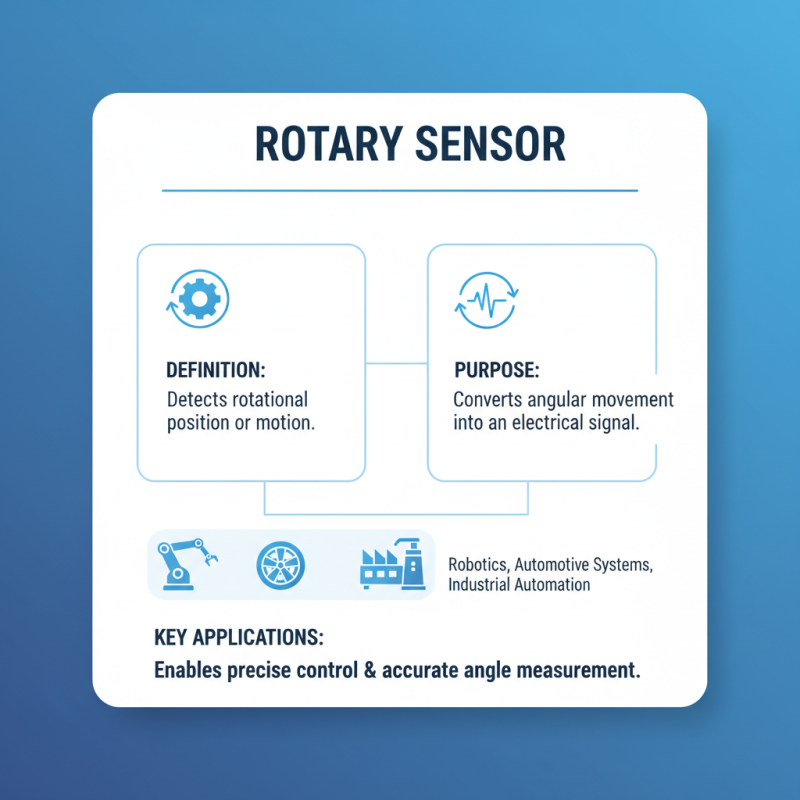
A rotary sensor is a device that detects rotational position or motion. Its purpose is to convert angular movement into an electrical signal. This makes it valuable in many applications, from robotics to automotive systems. The sensor can measure angles accurately. This capability is crucial for precise control in various machines.
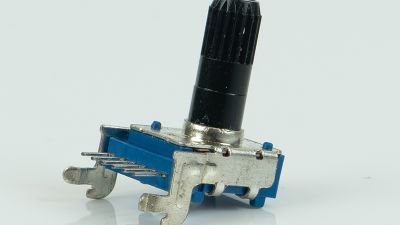
These sensors operate using different principles, such as potentiometric or optical technologies. In a potentiometer, a resistive element converts rotation into a varying voltage. Optical sensors use light beams to detect changes in position. Both methods enable the tracking of rotation effectively. However, each comes with challenges. For example, potentiometers may wear out over time, affecting accuracy.
Rotary sensors are essential in modern technology. They help improve efficiency and precision. Yet, they can be susceptible to environmental factors like dust and temperature. Maintenance becomes an important aspect. In some cases, users overlook regular checks. This oversight can lead to performance issues. Understanding the sensor's limitations is vital for optimal use.
Types of Rotary Sensors: Absolute vs. Incremental
Rotary sensors play a crucial role in modern technology. They can be classified into two main types: absolute and incremental. Each type has its unique features and applications. Understanding these differences is essential for choosing the right Sensor Rotary for a specific use.
Absolute rotary sensors provide a distinct position within a complete rotation. They generate a unique output signal for each position. This makes them ideal for precise applications. For instance, in robotics, knowing the exact position is vital. However, they can be more expensive than incremental sensors. This could be a limiting factor for some projects.
Incremental rotary sensors, on the other hand, measure the change in position. They produce pulses as the rotor turns. This means they keep track of movement but do not know the starting position. They are great for situations where relative position matters. For example, a conveyor belt system might utilize these sensors. Yet, if the system loses power, it can forget its position. Careful thought is needed when deciding which type suits your requirements best.
Working Principle: How Rotary Sensors Measure Rotation
Rotary sensors play a crucial role in various applications, measuring the rotation of objects. These sensors are widely used in robotics, automotive systems, and industrial machinery. They detect angular displacement by converting mechanical motion into an electrical signal. This transformation allows precise measurement of rotational position or speed.
The working principle of rotary sensors often relies on technologies like potentiometry or rotary encoders. Potentiometric sensors use resistive elements to measure voltage changes due to rotation. In contrast, rotary encoders employ optical or magnetic methods. According to a recent industry report, the market for rotary sensors is expected to grow at a compound annual growth rate (CAGR) of 6.9% from 2021 to 2026. This growth indicates rising demand across various sectors.
In real-world applications, rotary sensors face challenges. The accuracy of these sensors can be affected by temperature fluctuations and mechanical wear over time. A study found that about 15% of sensors in industrial settings may experience degradation in performance after extended use. This raises questions about reliability and longevity in critical applications. Therefore, ongoing innovation is vital to enhance sensor performance and durability.
Rotary Sensor Rotation Measurement Data
Key Components of Rotary Sensors Explained
Rotary sensors play a crucial role in various applications. Understanding their key components is essential for grasping how they function. The main parts include a shaft, a sensing element, and a housing. The shaft provides the physical conduit for rotation. It connects to the mechanism or object being monitored.
The sensing element is the heart of the sensor. It detects the position and movement of the shaft. Common types are resistive and optical sensors. Resistive sensors use variable resistors to measure angles, while optical sensors rely on light to determine positioning. The housing protects these components from external elements. Yet, many overlook how the housing’s material can affect performance.
Calibration is critical for accuracy. A poorly calibrated sensor can lead to significant errors. Regular maintenance should not be neglected. Moreover, understanding environmental factors is vital. High temperatures or humidity can impact reliability. Designers must anticipate these challenges for optimal operation.
Applications of Rotary Sensors in Various Industries
Rotary sensors play a crucial role in various industries. Their applications can be seen in automotive, aerospace, and robotics. For instance, in automotive engineering, these sensors help in determining the position of components with precision. They enhance safety by monitoring the steering angle and throttle position. This real-time feedback is vital for improving vehicle performance.
In aerospace, rotary sensors ensure accurate movement in flight control systems. They provide essential data for navigation and stability. A slight error in measurement can lead to significant consequences. Thus, the reliability of rotary sensors is paramount. Meanwhile, in robotics, they enable precise manipulation and movement. They assist robots in tasks that require exact positioning. A Rotary Hall Sensor is often used in these applications for its efficiency and accuracy.
Despite their advantages, there are challenges. Sensor calibration can be complicated. Environmental factors may affect their performance. Regular maintenance is essential, yet often overlooked. This could lead to unexpected failures. The importance of awareness and ongoing assessment becomes clear in industrial settings. Proper attention can greatly enhance the longevity and reliability of these devices.
What is a Rotary Sensor and How Does it Work? - Applications of Rotary Sensors in Various Industries
| Application Area |
Type of Rotary Sensor |
Functionality |
Industry |
| Automotive |
Hall Effect Sensor |
Measures rotational position of steering angle |
Transportation |
| Robotics |
Optical Encoder |
Tracks the position and movement of robotic arms |
Manufacturing |
| Industrial Automation |
Potentiometer |
Regulates speed and position of motors |
Industrial |
| Consumer Electronics |
Rotary Encoder |
Controls volume and navigation in devices |
Electronics |
| Aerospace |
Gyroscopic Sensor |
Measures angular velocity for flight instruments |
Aerospace |
Advantages and Limitations of Using Rotary Sensors
Rotary sensors are widely used in various industries for their precision in position sensing. They offer advantages like high accuracy and reliability, making them suitable for robotics and automation. For example, a study by MarketsandMarkets reports that the rotary sensor market is projected to grow from $3 billion in 2021 to $4.5 billion by 2026. This growth indicates the importance of rotary sensors in modern applications.
However, rotary sensors do have limitations. They can be sensitive to environmental factors like temperature and moisture. This can affect performance and lead to inaccurate readings. Moreover, the complexity and cost of Rotary Encoder Sensors can hinder their adoption in smaller projects or startups, as the initial investment may not always guarantee returns. Users must consider these challenges while weighing the benefits against costs and reliability.
Maintenance is another critical aspect. Regular calibration and potential repairs can be required, which adds to the overall resources spent on rotary encoder sensors. Despite advancements, they are not entirely fail-proof. Addressing these limitations requires careful evaluation of specific use cases and long-term goals to ensure optimal performance.
Future Trends in Rotary Sensor Technology and Innovation
The future of rotary sensor technology is promising and dynamic. Numerous industries are exploring how these sensors can enhance efficiency. One emerging trend is the push towards miniaturization. Smaller sensors could fit into tighter spaces, enabling new applications. In robotics, for example, compact Rotary Switches could improve precision in movements.
Another interesting direction is the integration of smart technology. Combining rotary sensors with IoT capabilities can lead to advanced monitoring systems. These systems could analyze real-time data, making adjustments instantly. However, this complexity brings challenges. Ensuring security and reliability remains a concern. The more connected the systems, the greater the risk of vulnerabilities.
Sustainability is also becoming a focal point. Developers aim to create more energy-efficient sensors. Materials and designs are evolving to reduce waste. Yet, finding a balance between functionality and eco-friendliness can be tricky. As innovations unfold, many questions linger on the impact of these advancements. Exploring the full potential of rotary sensors requires continuous reflection and adaptation.
Exploring the Market Trends and Innovations in Rotary Potentiometers: A Focus on the RK1111G Concentric Potentiometer with Knob Cap
The RK1111G concentric potentiometer represents a significant advancement in rotary potentiometer technology, reflecting the latest market trends and innovations in the field. With a minimum order quantity of 2000 units, this versatile component is designed for a wide range of applications, including audio amplifiers, speakers, home appliances, medical equipment, and communication devices. Its robust specification allows for customization, making it an ideal choice for manufacturers looking to tailor functionalities according to specific needs.
This potentiometer excels in adjusting various parameters such as volume, light intensity, speed, pressure, and temperature, providing users with precise control over their devices. With its origin in Guangdong, China, the RK1111G is crafted to meet the demands of modern electronic applications, ensuring reliability and performance in diverse environments. As industries increasingly seek innovative solutions, the RK1111G stands out as a key component that enhances user experience while supporting the evolution of smart technology in everyday products.
FAQS
: The two main types are absolute and incremental rotary sensors. Each has unique features and applications.
They provide a distinct position within a complete rotation. Each position generates a unique output signal.
They can be more expensive than incremental sensors, which might limit their use in some projects.
They measure the change in position. They produce pulses as the rotor turns but don’t know the starting position.
They are great for applications where relative position matters, such as conveyor belt systems.
The system may forget its position, which could cause issues in operation.
Miniaturization is emerging, allowing smaller sensors to fit in tighter spaces for new applications.
Integrating IoT capabilities can lead to advanced monitoring systems, allowing real-time data analysis.
Increased complexity raises concerns over security and reliability in connected systems.
There is a focus on creating energy-efficient sensors while balancing functionality and eco-friendliness.
Conclusion
A rotary sensor is a crucial device used to measure the angle of rotation and its purpose spans various industries, from robotics to automotive. They are generally categorized into two main types: absolute and incremental sensors. Absolute rotary sensors provide a unique position value for each angle of rotation, while incremental sensors measure changes in position relative to a start point.
The working principle of rotary sensors involves detecting the movement through electrical signals generated from the rotary position. Key components that make this possible include encoders, resistive elements, and magnets. Applications can be found in industrial automation, vehicle control systems, and even consumer electronics. While rotary sensors offer numerous advantages like precision and reliability, they also come with limitations, such as sensitivity to environmental factors. Future trends indicate ongoing innovation in rotary sensor technology, enhancing their efficiency and expanding their applicability across more advanced sectors.

 +86 18928646960+86 13630152584
 Contact Email