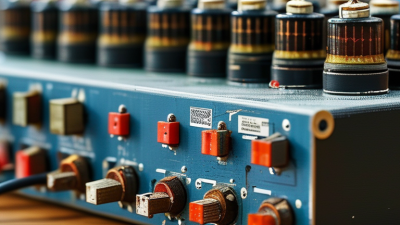
When it comes to precision engineering, you really can’t underestimate how important Multi-Turn Potentiometers are. I’ve spoken with folks like Dr. Michael Stein, an expert in electronic components at Precision Controls Inc., and he’s pretty clear about it: “The reliability of a Multi-Turn Potentiometer is crucial for making sure you get accurate control in all sorts of applications.” Basically, this tech plays a big role in letting us make those tiny, precise adjustments—whether it’s in consumer gadgets or industrial machines.
These multi-turn pots give you excellent control over electrical signals, which makes a real difference in how devices perform and how smooth the user experience is. Their clever design allows for really fine-tuned adjustments—super handy in fields like audio gear or robotics, for example. But, fair warning: not all multi-turn potentiometers out there are equal. Shoppers need to sift through the options carefully, trying to find a good balance between quality and price.
That said, even though they’re pretty awesome, there are some pitfalls. Cheaper or poorly made models can sometimes perform inconsistently, and that can be pretty annoying. So, it’s really important to do your homework—research and pick components that match your needs without sacrificing reliability. Listening to expert advice and reading real user experiences can make a huge difference when you're trying to make the right choice.
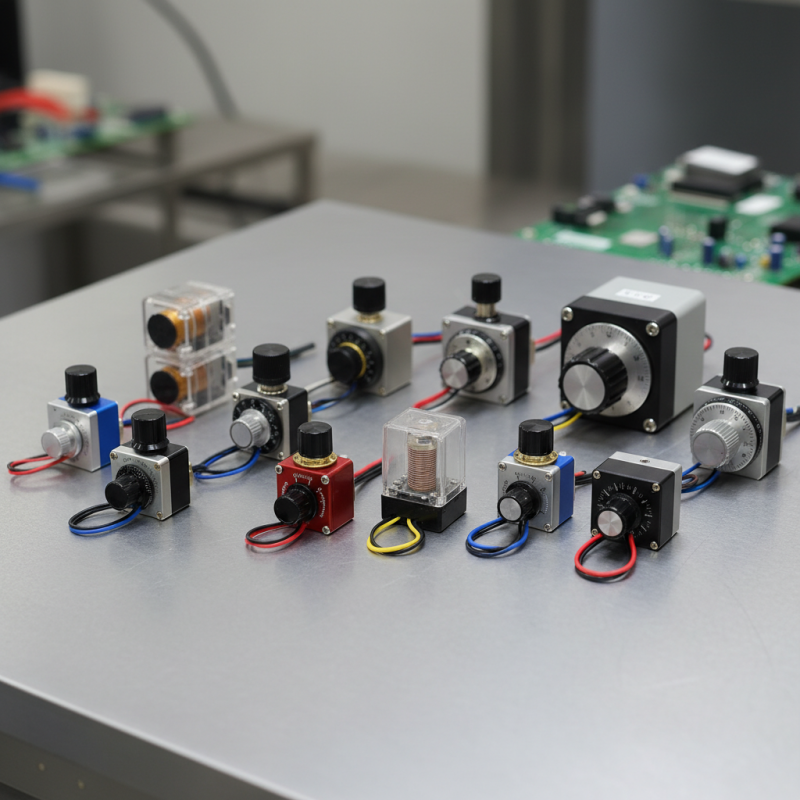
Multi-turn potentiometers are pivotal in applications requiring fine control. These components allow users to make detailed adjustments in electrical circuits. Their high precision is crucial for tasks such as calibration, audio mixing, and robotics. In today's tech-driven world, having the right potentiometer can significantly impact performance.
Precision Multi-Turn Potentiometers offer various advantages. They provide excellent linearity, allowing for smooth adjustments. Their design typically includes multiple turns, which enhances their resolution. This means users can achieve highly accurate settings. Applications range from industrial systems to consumer electronics. Engineers often favor these components for their reliability and longevity.
However, choosing the right potentiometer can be challenging. Various factors should be considered—size, resistance value, and environmental conditions. It's essential to understand how the application affects these choices. Some may overlook the impact of temperature on performance. Evaluating the scope of application helps in making informed decisions. Remember, finding the perfect balance between cost and quality is vital in the selection process.
When selecting multi-turn potentiometers, there are several key features to consider. Precision is paramount. Many applications require high accuracy, especially in audio and industrial controls. A report by MarketsandMarkets indicates that the global multi-turn potentiometer market is expected to grow substantially, driven by the rising demand for accurate positioning systems. It's essential to choose a model with a resolution that matches your requirements.
Another crucial aspect is durability. Multi-turn potentiometers are often subjected to harsh environments. Choosing a potentiometer with robust housing and moisture resistance can enhance its lifespan. Industry data shows that approximately 28% of device failures result from environmental factors. This highlights the need for attention to material quality and sealing in your selection.
The type of adjustment mechanism is also vital. A Multi-Directional Joystick Potentiometer can provide intuitive control in ergonomic designs. User comfort and ease of use can significantly impact operational efficiency. However, it's important to assess how different designs affect responsiveness and precision. Opt for a joystick model that aligns with your ergonomics needs while ensuring it meets your technical performance criteria. Such detailed considerations can lead to effective solutions, but they also require careful evaluation to avoid overlooking critical aspects.
| Model | Resistance Range (Ohms) | Power Rating (Watts) | Number of Turns | Tolerance (%) | Temperature Coefficient (ppm/°C) |
|---|---|---|---|---|---|
| Model A | 100 - 500k | 0.25 - 2 | 10 | ±5 | 50 |
| Model B | 200 - 1M | 0.5 - 1 | 15 | ±10 | 100 |
| Model C | 50 - 2M | 0.1 - 0.5 | 20 | ±5 | 25 |
| Model D | 10 - 100k | 0.5 - 3 | 5 | ±20 | 150 |
| Model E | 1k - 10M | 1 - 5 | 25 | ±1 | 30 |
| Model F | 10 - 1M | 0.25 - 2 | 30 | ±5 | 45 |
| Model G | 1k - 500k | 0.5 - 4 | 20 | ±10 | 60 |
| Model H | 5k - 2M | 0.1 - 1 | 50 | ±2 | 20 |
| Model I | 50 - 1M | 0.5 - 2 | 40 | ±15 | 65 |
| Model J | 1k - 10M | 0.5 - 3 | 30 | ±1 | 75 |
When considering the top manufacturers of multi-turn potentiometers globally, quality and precision are paramount. These components are essential in various applications, from industrial machinery to consumer electronics. Notable manufacturers focus on creating durable products that offer reliable performance. Multi-turn potentiometers are designed for fine adjustments. This feature is crucial in applications where accuracy is non-negotiable.
Many leading manufacturers emphasize their development processes. Engineers strive for innovations that enhance performance and longevity. Some companies put extensive research into materials used. This ensures a more robust product. However, not every manufacturer achieves the desired balance between cost and quality. Buyers often face challenges selecting the right Potentiometer 2 for their specific needs. Quality control is a major concern in the industry. Manufacturers must continuously improve to meet evolving standards.
Additionally, global supply chains can complicate availability. Manufacturers need to navigate logistics efficiently to meet demand. Some may over-promise and under-deliver on timelines. It’s critical for buyers to assess a company’s reputation and reliability. The right choice can significantly affect a project's success. Therefore, stakeholders must conduct thorough research before making decisions.
In 2023, the demand for multi-turn potentiometers continues to grow significantly. Manufacturers and engineers require precision control in various applications. These components are essential in audio equipment, sensors, and robotics. According to recent industry reports, the multi-turn potentiometer market is projected to reach 1.5 billion USD by 2025, reflecting an annual growth rate of 5.2%.
The functionality of multi-turn potentiometers allows precise adjustments. This precision is crucial in fine-tuning devices, where even slight variations can affect performance. Industry data emphasizes that 70% of engineers prioritize accuracy in potentiometer selection. Therefore, they often prefer multi-turn models with at least 10 turns for enhanced resolution. However, these components can sometimes lack durability under harsh conditions.
Conversely, installation challenges persist. Some users report difficulties in integrating these potentiometers into existing systems. Compatibility with different devices can be an issue, leading to inefficient setups. As the market evolves, manufacturers aim to address these concerns, balancing precision with user-friendly designs.
When selecting multi-turn potentiometers, performance and pricing play crucial roles. Various models on the market showcase a wide range of specifications. Some offer fine resolution with minimal noise. Others emphasize durability and lifespan. This diversity can make decision-making difficult for global buyers.
Comparative analysis reveals significant price variances across similar models. High-end options typically promise greater precision but may not justify their costs for every application. Mid-range models serve well in various scenarios, offering reliable performance without exorbitant prices. However, prospective buyers must consider the long-term benefits versus initial investments.
Not all models perform as expected; some may exhibit inconsistencies in resistance. This could affect the quality of the output signal. Users might find themselves frequently recalibrating certain units. Moreover, customer reviews often note a lack of robust support for troubleshooting. Identifying which features truly matter for your needs is essential. Your choice must balance performance and cost-effectiveness while being mindful of the potential for unforeseen issues.
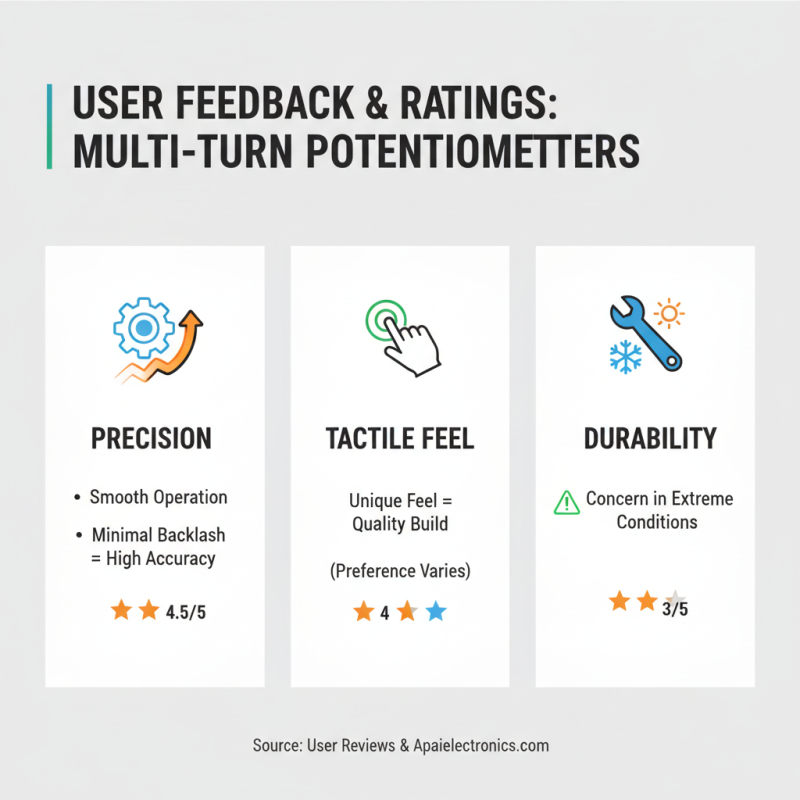
When selecting multi-turn potentiometers, user feedback is crucial. Many users emphasize precision. A good Co Potentiometer should offer smooth operation and minimal backlash. This enhances accuracy in applications that require fine adjustments. Some users report that certain models possess a unique tactile feel, indicating quality manufacturing. Others, however, have concerns about durability in extreme conditions.
Ratings from various platforms highlight the importance of reliability. Many users express satisfaction with their choices, noting longevity and consistent performance. Yet, not every multi-turn potentiometer meets expectations. Some products received complaints about inconsistency in resistance values. This inconsistency can lead to frustrations in professional settings. Different users prioritize different features, such as ease of installation or compact design, which can influence their ratings significantly.
Additionally, the overall user experience varies across brands. Feedback often reveals patterns in performance, usability, and value for money. Gathering a range of reviews can provide a broader perspective. This dialogue among users reflects the need for continuous improvement. Each rating tells a part of the story, shaping future innovations in the multi-turn potentiometer market.
The landscape of multi-turn potentiometer technology is evolving rapidly. These devices are key in applications ranging from audio equipment to industrial controls. The push for higher precision and miniaturization is driving new design approaches. Engineers are exploring innovative materials to enhance durability and performance. As a result, multi-turn potentiometers are becoming more reliable in demanding environments.
Future trends may see the integration of digital interfaces. This could allow for greater control and ease of use. However, the transition to digital can pose challenges. Designers must balance complexity with user-friendliness. Additionally, energy efficiency is becoming a crucial factor. Potentiometers need to consume less power without sacrificing performance.
Manufacturers are also looking at sustainable practices in their production processes. This reflects a growing commitment to environmental responsibility. There’s room for improvement in recycling and material sourcing. It requires a mindset shift among producers and consumers alike. The advances in multi-turn potentiometers are exciting, but they also present a need for ongoing reflection and adaptation.
: They are used in various applications, from industrial machinery to consumer electronics, requiring precise adjustments.
Quality is essential. Reliable performance and durability significantly impact their effectiveness in critical applications.
Buyers should assess the manufacturer's reputation, reliability, and product reviews before making decisions.
No, not every manufacturer manages this balance well. Some prioritize cost over quality, affecting performance.
User feedback indicates performance reliability, longevity, and satisfaction, providing guidance for potential buyers.
Common issues include inconsistency in resistance values and durability problems in extreme conditions.
Variability exists in performance, usability, and design preferences, influencing overall satisfaction with products.
Precision is vital, as even minor inaccuracies can lead to significant operational issues in sensitive applications.
Navigating logistics can be complex; manufacturers must ensure timely delivery while meeting demand.
Continuous improvement in manufacturing processes and materials is needed to keep pace with evolving standards and user needs.
This article provides a comprehensive overview of Multi-Turn Potentiometers, highlighting their essential applications across various industries. With a focus on key features that are crucial for selection, it guides global buyers in making informed choices. The discussion includes a review of top manufacturers and a detailed analysis of the best multi-turn potentiometers available in 2023, showcasing pricing and performance comparisons.
Additionally, user feedback and ratings are examined to gauge satisfaction and reliability, giving insights into real-world usage. The article concludes by exploring future trends in the technology and design of multi-turn potentiometers, ensuring that readers are aware of advancements that could shape their purchasing decisions.